

The invention of the Braille alphabet in 1824 represents a major step forward in the history of education and communication for the blind and visually impaired. This creation has radically transformed their access to knowledge and autonomy, paving the way for wider social and cultural inclusion. A review of the origins of this revolutionary invention and its lasting impact.
The genesis of the Braille alphabet in 1824
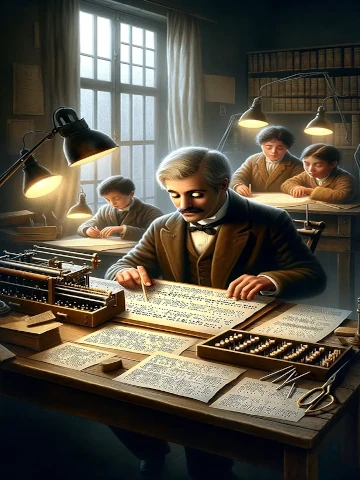
The Braille alphabet was invented in 1824 by Louis Braille, who himself became blind at the age of three following an accident. At that time, literacy options for blind people were extremely limited, mainly based on heavy and impractical systems. Inspired by a military nocturnal reading code using relief points, Braille has designed a simple and efficient tactile system. Its alphabet consists of combinations of relief points arranged in a six-point cell, allowing to represent all letters, numbers and punctuation marks. This innovation has provided an autonomous method of reading and writing adapted to the sensory needs of the blind.
The revolutionary impact of Braille's invention
The introduction of the Braille alphabet has profoundly changed the lives of blind people. For the first time, they were able to read and write independently, which greatly facilitated their access to education and information. This system has facilitated their inclusion in society, enabling them to pursue studies, work and participate in cultural life. Today, Braille is used all over the world, not only in books and documents, but also in public signage and appropriate technological devices. This invention is a powerful testimony of human ingenuity and the willingness to overcome barriers related to disability.
The Braille alphabet remains one of the greatest gifts to the community of blind people, demonstrating the importance of accessibility and equal opportunities. More than two centuries after its creation, Louis Braille's system continues to inspire innovations and improve the daily lives of millions of people around the world.