

The invention of the friction match in 1827 represents a major step forward in the history of everyday objects. Before that date, burning a fire was a long and often tedious task, requiring complicated tools or flammable materials that were difficult to handle. This invention simplified this essential gesture, offering a new ease of use that would quickly spread throughout the world.
The revolutionary invention of friction match in 1827
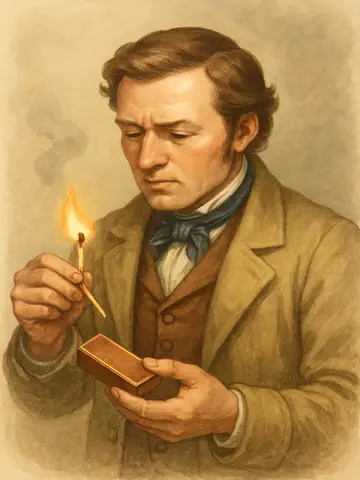
In 1827, the Englishman John Walker developed the first modern friction match. Unlike previous methods which used highly flammable substances or complex lighters, this match used a head containing a chemical mixture capable of burning by simple friction on a rough surface. This innovation not only made ignition safer, but also much more accessible. The match thus became a light, portable and practical object that could be used by all without the need for specific skills or additional tools.
How the match changed daily life in the 19th century
The arrival of the friction match profoundly altered daily habits in the 19th century. Whether it was to light a fireplace, an oil lamp or a cigarette, the speed and simplicity offered changed the way people managed fire in their domestic life. This invention has also contributed to safety, reducing the risks associated with the use of torches or flint. In addition, the match quickly became a common consumer product, available in large quantities at lower cost, which democratized access to fire and facilitated many activities, both at home and in craft and industrial trades.
The friction match invented in 1827 marked a decisive turning point in the history of fire tools. Simple, efficient and accessible, it has transformed the daily lives of the 19th century people and continues to be an essential object. His invention perfectly illustrates how seemingly simple innovation can have a lasting and universal impact on human life.