

The Second Vatican Council, convened by Pope John XXIII, represents a major turning point in the history of the Catholic Church. Its opening in 1962 marked the beginning of a period of profound reflections and reforms designed to modernize the Church and better respond to the challenges of the contemporary world. This article explores the historical context that led to the convening of this Council and the important events of its first days.
The historical context of the beginning of the Second Vatican Council
In the early 1960s, the Catholic Church was at a crossroads. After several decades marked by a conservative and often rigid approach, Pope John XXIII, elected in 1958, wanted to breathe new momentum. The world was undergoing rapid transformations: technological progress, geopolitical tensions related to the Cold War, and profound cultural change in Western societies. Aware of the need to adapt the Church to these developments, John XXIII announced in 1959 his will to convene an ecumenical council. This historical context was therefore that of an urgent need for dialogue between tradition and modernity, between faith and reason, which would determine the orientation and importance of the Second Vatican Council.
The first days of the Second Vatican Council in 1962
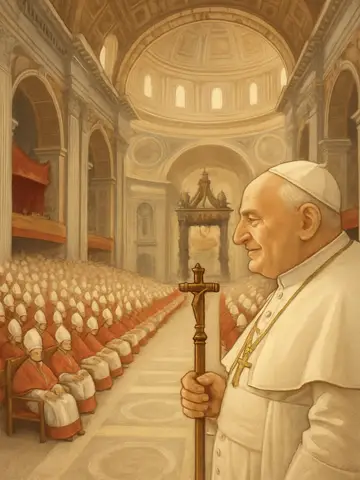
The official opening of the Second Vatican Council took place on October 11, 1962 in St Peter's Basilica in Rome, in front of thousands of bishops from all over the world. This first session was marked by a memorable inaugural speech by Pope John XXIII, in which he expressed his hope for spiritual and pastoral renewal. The debates, although often delicate, began with a climate of openness and fraternity. The bishops quickly addressed essential issues such as the liturgy, the role of the lay people, and the Church's relations with the modern world. These first days laid the foundation for a council that would last several years, gradually revolutionizing the way the Church conceived itself and its relationship to the faithful and society.
The beginning of the Second Vatican Council in 1962 was a historic moment, a symbol of hope and openness for the Catholic Church. By becoming aware of the challenges of the modern world, the Church opened a new era of dialogue and reform, whose repercussions are still being felt today. This council remains an essential reference for understanding the dynamics and evolution of the Catholic faith in the twentieth century.