


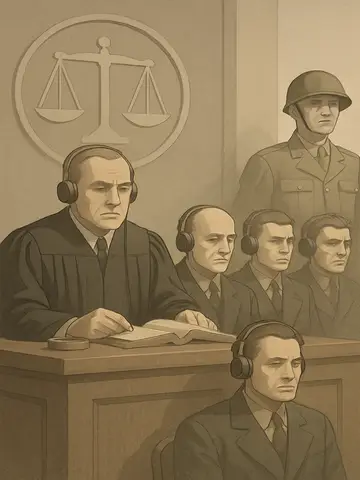
The laws of Nuremberg, promulgated in 1935 in Nazi Germany, represent a dark and tragic turning point in the history of the twentieth century. These legal texts have formalized racial discrimination against Jews, paving the way for a systematic policy of persecution and exclusion. In order to fully understand the impact of these laws, it is essential to examine their historical context and the social and legal consequences they have created.
Historical background and origins of Nuremberg laws
The laws of Nuremberg were adopted in a political climate marked by the rise of Nazism and the will of Adolf Hitler to impose a racist ideology based on the « purity » of the Aryan race. In Germany, after the Nazi party took power in 1933, a series of discriminatory measures had already been put in place against the Jews, but these laws came to formalize and codify this discrimination nationally. Adopted at the annual congress of the Nazi party in Nuremberg, they were intended to exclude Jews from public life and to prohibit marriages and sexual relations between Jews and Aryans on the basis of strict racial criteria. These laws also reflected the virulent anti-Semitism that led the Nazi regime, justifying by law extreme social and racial segregation.
Social and legal consequences of the 1935 laws
The laws of Nuremberg had devastating consequences for German society and Jewish populations. Legally, they deprived Jews of their German citizenship, relegating them to the status of subjects without civil rights. This legal exclusion has led to a series of discriminatory measures, including employment, education and housing. Socially, these laws strengthened Jewish isolation and legitimized racial hatred, thus paving the way for subsequent persecution, including the Shoah. Moreover, they have also sown division in German society, forcing many citizens to choose between complicity and resistance to an increasingly oppressive and violent regime.
Nuremberg's 1935 laws symbolize a crucial step in the implementation of Nazi racial policy that led to one of the greatest human tragedies in modern history. Understanding their origin and effects is essential to never forget the dangers of hate and discrimination legislation. These laws recall the need to defend human rights and equality against all forms of oppression.