


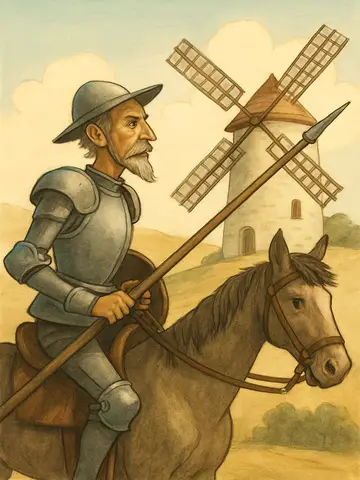
Published in 1605, Don Quixote Miguel de Cervantes is often considered one of the most influential books in world literature. This novel, both comic and deep, marked a turning point in the way of writing and reading narratives at the dawn of the seventeenth century. Its impact goes far beyond its time, offering timeless reflection on society, madness and the quest for ideal.
The impact of Don Quixote on 17th-century literature
Don Quixote revolutionized 17th century literature by breaking the conventions of the traditional chivalry novel. Cervantes introduced a complex hero, both ridiculous and touching, who embodies the struggle between dream and reality. This character inspired many authors of his time and centuries later, paving the way for modern novels. Moreover, the use of satire and realism in the narrative allowed a subtle but powerful social critique, which contributed to a new form of literary expression closer to the daily human experience. With its innovative style, Don Quixote also influenced how to structure a narrative, mixing direct narration, dialogues and different levels of reading.
Analysis of major themes in Don Quixote (1605)
The novel explores several major themes that still resonate today. The quest for the ideal, embodied by Don Quixote himself, highlights the tension between dreams and reality, questioning the relevance of utopia in a sometimes brutal world. Madness, a central theme, is presented not only as a defect but also as a form of freedom in the face of rigid and materialistic society. Moreover, the relationship between Don Quixote and his faithful squire, Sancho Panza, illustrates the contrast between imagination and pragmatism, enriching narrative dynamics. Finally, Don Quixote is also a reflection on the power of books and stories, since the hero is deeply influenced by chivalry novels, which opens a meditation on the impact of narratives on the life and perception of the world.
Don Quixote 1605 remains a founding work whose influence on literature and culture is immeasurable. Through his narrative audacity and deep reflections, Cervantes offered a critical mirror to society of his time while proposing a universal work. More than four centuries after its publication, Don Quixote continues to fascinate, question and inspire readers around the world.