


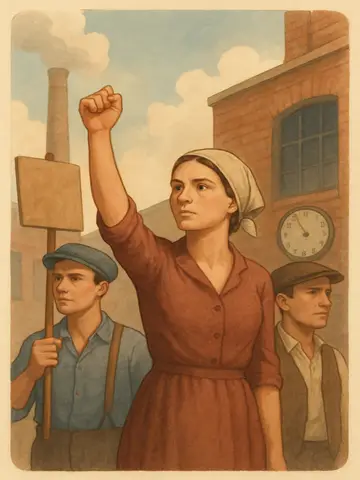
The Popular Front, a coalition of left-wing parties formed in 1936 in France, marks a decisive turning point in the social history of the country. Faced with a severe economic crisis and rising social tensions, the Léon Blum government is implementing a series of ambitious reforms aimed at improving the living and working conditions of workers. These social laws, emblematic of this period, constitute a major step forward in the recognition of workers' rights and the construction of a modern welfare state.
Major social reforms of the Popular Front in 1936
In 1936, the Popular Front introduced several deeply innovative social laws. Among the most emblematic, paid leave is introduced, offering employees two weeks of paid vacation, a revolutionary measure at the time. At the same time, the working week increases from 48 to 40 hours, thus reducing working time and improving the quality of life of workers. The government also imposes collective agreements, strengthening bargaining between employers and unions and protecting employees more from abuse. These reforms are accompanied by measures on social security and working conditions, laying the foundations for a sustainable social policy.
Impact of social laws on French workers
The adoption of these social laws has a profound and immediate impact on the French working class. Paid leave allows millions of workers to experience rest and leisure, previously reserved for the more affluent classes, which contributes to better physical and mental health. Reducing working time not only reduces fatigue but also creates new employment opportunities. By facilitating trade union representation, these laws encourage collective mobilization and strengthen social democracy. However, these advances also encounter resistance in certain economic sectors, but they definitely create a new dynamic that has a lasting impact on social relations in France.
The social laws of the Popular Front in 1936 embody a founding step in the construction of social rights in France. By meeting workers' expectations and modernizing the legislative framework, they help shape a more just and supportive society. Their legacy continues today, recalling how political and social mobilization can transform the daily lives of citizens.