


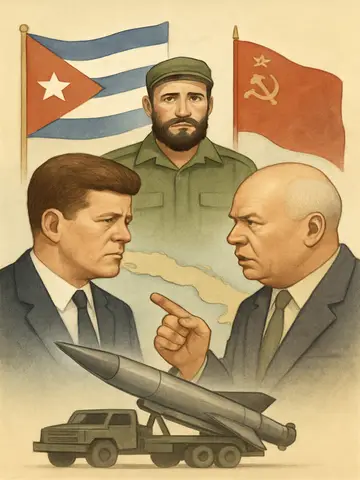
The 1962 crisis in Cuba was one of the most tense moments of the cold war, when the world came close to the nuclear catastrophe. This confrontation between the United States and the Soviet Union, triggered by the discovery of Soviet nuclear missiles on the island of Cuba, highlighted the extreme risks of the ideological conflict between the two superpowers. This crisis has profoundly marked international history, illustrating both the fragility of world peace and the negotiating capacity in a situation of extreme tension.
Historical context of the 1962 crisis in Cuba
Following the 1959 Cuban revolution led by Fidel Castro, Cuba became a close ally of the Soviet Union, causing growing concern in the United States. Cuba's geographical proximity to American territory, just 150 kilometres from the coast of Florida, represented a major strategic threat to Washington. In response to the failure of the invasion of Pig Bay in 1961, supported by the United States to overthrow Castro, Moscow sought to strengthen the defence of its ally by secretly installing nuclear missiles on the island. This tense cold war context, marked by heightened ideological and military rivalries, laid the foundation for what would become an explosive confrontation.
Conduct and consequences of nuclear confrontation
The crisis broke out in October 1962 when the United States discovered the sites for launching Soviet missiles in Cuba with aerial photographs. President John F. Kennedy chose to put in place a naval blockade to prevent the arrival of new weapons, while demanding the withdrawal of existing facilities. After 13 days of tense negotiations and veiled threats, an agreement was reached: the Soviet Union would withdraw its missiles in exchange for the American promise not to invade Cuba and the secret withdrawal of American missiles into Turkey. That outcome prevented a catastrophic nuclear war and led to a global awareness of the need for diplomacy and dialogue to prevent similar conflicts. In addition, the crisis prompted the creation of a direct communication line between Washington and Moscow, known as « red phone »to facilitate trade in times of crisis.
The 1962 Cuban crisis remains a key episode of the cold war, illustrating the dangers of the nuclear arms race and the importance of international diplomacy. This event not only avoided an immediate nuclear conflict, but also paved the way for increased efforts for arms control and relaxation between the major Powers. By studying this crisis, the world continues to have an essential lesson on the fragility of peace and the need to focus on dialogue even in the most critical moments.