

The election of the President of the Republic by direct universal suffrage, established in 1962, marks a major step in the political evolution of the Fifth French Republic. This reform has profoundly transformed the role and legitimacy of the Head of State, which has a lasting impact on the functioning of French institutions. A review of this democratic innovation that has strengthened the link between the President and citizens.
The birth of direct universal suffrage in 1962
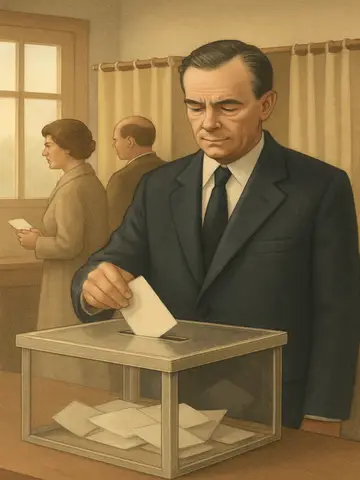
The idea of electing the President of the Republic by a direct vote of the citizens dates back to an assertive Gaullist will since the founding of the Fifth Republic in 1958. Until then, the president was chosen by an electoral college, limiting his popular anchor. In 1962, General de Gaulle proposed a referendum to establish direct universal suffrage for the presidential election. This choice is part of a logic of legitimization of the executive power in the face of the chronic parliamentary instability of previous republics. The referendum, adopted by a majority of the French, thus gives the president a strengthened democratic legitimacy, making him the first political leader directly elected by the people.
Impact of the presidential election on the Fifth Republic
The establishment of direct universal suffrage profoundly alters the institutional dynamics of the Fifth Republic. The president, now elected by all citizens, becomes a central and undisputed figure in French political life. This reform increases its weight in relation to Parliament and changes the nature of the Fifth Republic, which is approaching a semi-presidential regime where the executive authority is highly personalized. Moreover, the popular nature of the presidential election encourages candidates to conduct national campaigns, thereby promoting greater visibility and representation. This change also strengthens the stability of the executive branch, allowing the president to undertake reforms with a clear democratic basis, which has long-term shaped the French political landscape.
The election of the President by direct universal suffrage in 1962 was a decisive turning point that strengthened democracy in France while redefining the role of the Head of State. By directly entrusting power to citizens, this reform not only legitimized the President of the Republic but also transformed relations between institutions and society. More than fifty years after its establishment, this method of election remains a fundamental pillar of the Fifth Republic, demonstrating the importance of the direct link between the French and their president.