

The capture of Atahualpa in 1532 marks a decisive turning point in the history of South America. This event, which occurred during the Spanish conquest led by Francisco Pizarro, deeply upset the Inca Empire, once one of the largest and most powerful pre-Columbian civilizations. Understanding the historical context of this capture and its major consequences makes it possible to grasp the magnitude of this pivotal moment.
Historical context of the capture of Atahualpa in 1532
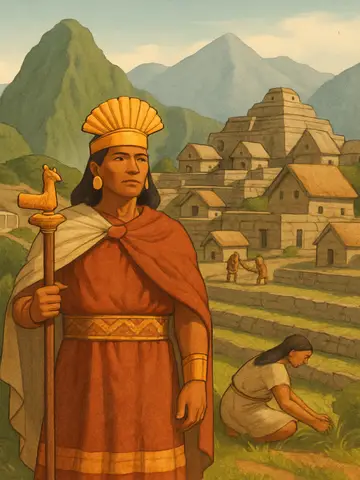
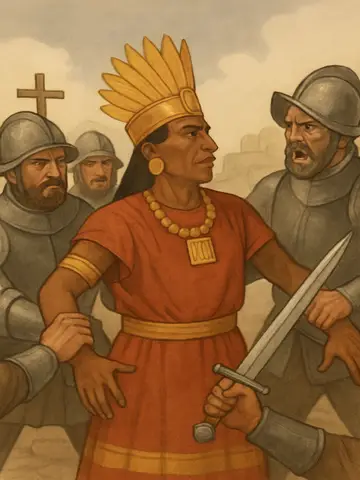
In 1532, the Inca empire was still at the top of its power, but it was weakened by a civil war between two rival brothers, Atahualpa and Huáscar, who fought the succession of Emperor Huayna Capac. Atahualpa, victorious of this conflict, was consolidating his power when the Spanish conquistadors, led by Francisco Pizarro, arrived in Cajamarca. Using both the internal division of the Incas and their ignorance of the Spanish intentions, Pizarro set a trap and captured Atahualpa during an apparently peaceful encounter. This master stroke allowed the Spaniards to quickly dominate an immense empire while controlling its leader.
Major consequences of capture on the Inca Empire
The capture of Atahualpa had dramatic consequences for the Inca Empire. Deprived of its sovereign, the empire quickly lost its cohesion and its ability to resist invaders. The Spaniards demanded a huge ransom in gold and silver, which the Incas shurried to provide, but this did not save Atahualpa, who was executed despite everything. His death caused a collapse of central power and allowed the conquistadors to pursue the conquest with less resistance. In the longer term, the take of Atahualpa was the beginning of the end of the Inca empire, which was gradually dismantled under Spanish domination, leading to the disappearance of many Andean political, social and cultural structures.
The capture of Atahualpa in 1532 remains a strong symbol of the tragic encounter between two worlds. This event, much more than just a hostage taking, represents the historic changeover that heralded the rapid fall of the Inca empire and the sustainable implantation of European colonization in South America. Understanding these facts helps us to better understand the geopolitical and human challenges of this pivotal period.