

The proclamation of the Second Reich in 1871 marks a decisive turning point in German and European history. This event symbolizes the unification of the many German states under one imperial crown, giving rise to a powerful modern empire led by the king of Prussia, who became emperor. A look back at this key moment that redesigned the continent's political map and laid the foundations of German power at the turn of the 20th century.
The birth of the Second Reich in 1871: historical context
In the mid-19th century Germany was a patchwork of independent kingdoms, duchy and principalities, often rivals. The rise of Prussia under the leadership of Otto von Bismarck, an outstanding pragmatic Chancellor and strategist, was decisive for unification. The Franco-Prussian war (1870-1871) served as a catalyst for this process, galvanizing German nationalism and isolating France. The siege of Paris was the scene of a heroic French resistance, but also of the affirmation of German solidarity, hitherto fragile, which led to the proclamation of the German Empire.
Solemn announcement and its major political consequences
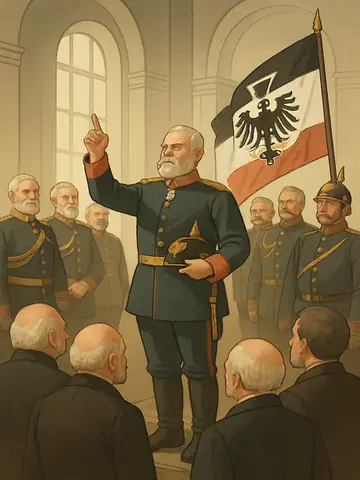
On 18 January 1871, in the Glaces Gallery of the Palace of Versailles, William I of Prussia was proclaimed Emperor of Germany under the name of William I. This solemn ceremony, orchestrated by Bismarck, symbolized not only German unity but also Prussian superiority. Politically, this proclamation upset the European balance: it placed Germany first among the continental powers and redefined alliances. The humiliated and impoverished France was going to seek to rebuild itself, nourishing a resentment that would fuel the tensions leading to the First World War.
The proclamation of the Second Reich in 1871 is more than just a political act: it is the culmination of a long process of national unification and a trigger for a new era in Europe. The German empire has become an inescapable force, shaping the continent's destiny for several decades. This event remains a fundamental milestone in understanding the geopolitical dynamics and conflicts that marked the late 19th and early 20th centuries.