

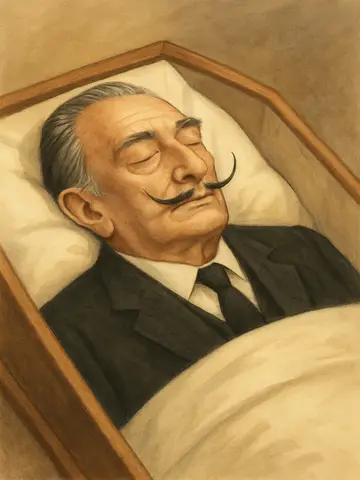
Salvador Dalí's death in 1989 marked the end of an era for surreal art and sparked deep emotion throughout the world. An iconic artist of the 20th century, Dalí was known not only for his exceptional talent, but also for his extravagant personality, which captivated generations. His death gave rise to a reflection on his work and its lasting impact in the art world.
Salvador Dalí's death in 1982: a global shock
On 23 January 1989, Salvador Dalí died at the age of 83 in his house in Portlligat, Spain. This news upset the artistic and cultural world, as Dalí was a must. His death was seen as the end of a major chapter of surrealism, a movement he helped to popularize internationally. The tributes came from many countries, stressing the importance of his work, which mixed dreams, obsession and technical mastery. Dalí left behind an indelible mark, making his disappearance a moment of great sadness but also of celebration of his genius.
Heritage and artistic influence after Dalí's death
After his death, Salvador Dalí's legacy continued to influence not only contemporary artists but also popular culture as a whole. His paintings, sculptures and writings have been extensively studied and exhibited in museums around the world. The Dalí Theatre-Museum in Figueres, his hometown, has become a place of pilgrimage for art enthusiasts, testifying to the durability of his influence. In addition, Dalí has inspired various fields, ranging from fashion to cinema, proving that its impact far exceeds the scope of surrealism alone. His audacity and creativity remain major sources of inspiration for present and future generations.
Salvador Dalí's death in 1989 did not mean an end to his influence, on the contrary. His work continues to fascinate, interrogate and upset artistic codes. Through his legacy, Dalí remains a must-see figure, a genius whose overflowing imagination still resonates deeply in the global cultural landscape.