


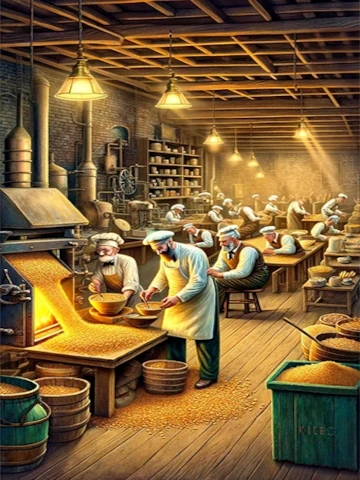
The invention of corn flakes in 1894 marked a major turning point in the history of food, particularly with regard to breakfast. This creation, born from an unexpected experience, has transformed culinary habits and introduced a new way of starting the day, combining simplicity, speed and nutrition. Back to the surprising origin of this iconic cereal and its lasting impact.
Origin of corn flakes: an accidental discovery in 1894
In 1894 John Harvey Kellogg, an American physician and nutritionist, worked in a sanatorium in Battle Creek, Michigan, where he sought to improve the diet of his patients. By a happy chance, as he tried to make a dough of wheat, it was forgotten and lasted a little too long. By passing it through a roller, he obtained thin crunchy slats which, when roasted, gave birth to what will soon be called corn flakes. This accidental discovery soon attracted not only its taste and texture, but also its digestive properties, in line with Kellogg's philosophy of promoting a healthy diet.
How corn flakes revolutionized modern breakfast
Before the appearance of corn flakes, breakfast was often a heavy and sometimes little varied meal, consisting mainly of hot dishes such as eggs, bacon or bread. The arrival of corn flakes has introduced a fast, easy-to-digest and ready-to-eat alternative, which has gradually conquered the homes. Their success has encouraged the development of many other breakfast cereals, creating a thriving industry. In addition to making it easier to prepare in the morning, corn flakes have helped raise awareness of the importance of a balanced meal as soon as you wake up, a principle that has become a standard of daily nutrition.
The invention of corn flakes in 1894, born of a culinary error, has profoundly changed eating habits around the world. With its simple experience in a sanatorium with a must-have supermarket product, this cereal has been able to impose thanks to its practicality and nutritional qualities. Even today, corn flakes remain a symbol of modernity and health at breakfast, testifying to the lasting impact of an accidental but revolutionary invention.