

At the beginning of the 19th century, Europe was marked by numerous conflicts, including the Napoleonic wars, which exacerbated the logistical needs of the armies. Food conservation becomes a key strategic issue in ensuring the sustainable supply of soldiers on the ground. In 1810 Nicolas Appert, a French inventor, developed a revolutionary method of food conservation.
Historical context of the invention of canning in 1810
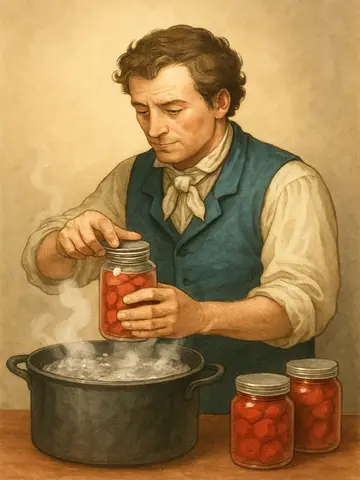
France, under Napoleon Bonaparte's First Empire, faced extensive military campaigns requiring the storage of supplies over long periods and under difficult conditions. Traditional techniques (salination, smoking) are insufficient to prevent food deterioration. At the same time, the industrial revolution is beginning to drive new innovations in manufacturing processes. Nicolas Appert, motivated by a competition launched by the French government in 1795 to improve the food supply of the armies, is developing a process of hermetic cooking of the food in glass jars, a method which takes the name of« appertization ».
Key facts and impact of sustainable food conservation
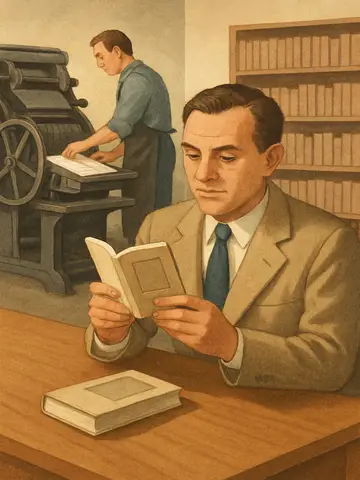
In 1810 Appert published his work detailing his process of heating food packed in closed containers, thus eliminating the microorganisms responsible for decomposition. This process prefigures the modern canned metal food, developed a few decades later by Peter Durand in 1810 as well. The invention revolutionizes military and civil logistics by allowing the prolonged preservation of food, facilitating transport and storage. It paves the way for food industrialization, improves food security and plays a key role in the colonial and economic expansion of the 19th century.
Historical links
The invention of Appert is a continuation of post-revolutionary scientific innovations, such as Lavoisier's work on food chemistry. It precedes the development of Pasteur's microbial theory in the mid-19th century, which will scientifically explain the mechanisms of conservation. In addition, the generalization of canning accompanies the development of railways and world trade, illustrating the interconnection between technical progress and social transformation. Finally, it indirectly contributes to the reduction of mortality during wars, improving the quality and availability of food rations.
Nicolas Appert's invention of food preserve in 1810 is a major technological turning point, allowing better management of food resources in a military and civilian context. It marks the beginning of a new era in food production and consumption, with a lasting impact on society and the global economy.