

The invasion of Russia in 1812 by Napoleon Bonaparte represents one of the most significant and tragic episodes of Napoleonic wars. This ambitious and bold campaign was motivated by complex strategic and political reasons. Yet what was to be a brilliant demonstration of French power quickly turned into a military disaster with heavy consequences for the Empire.
Napoleon's preparations before the invasion of 1812
Before launching his invasion, Napoleon undertook colossal preparations that demonstrated his intention to conduct a decisive campaign against Russia. Gathering the Great Army – a plethora of more than 600,000 men from all over Europe – he ensured that his troops were supplied and ready to face the long distances and difficult conditions of Russian territory. However, despite this impressive logistics, Napoleon underestimated the harshness of the Russian climate, the tactics of the burned earth used by the Russians, and the determination of his enemies not to fight. This mixture of military arrogance and excessive optimism would precipitate his campaign towards a resounding failure.
The tragic unfolding of Napoleon's Russian campaign
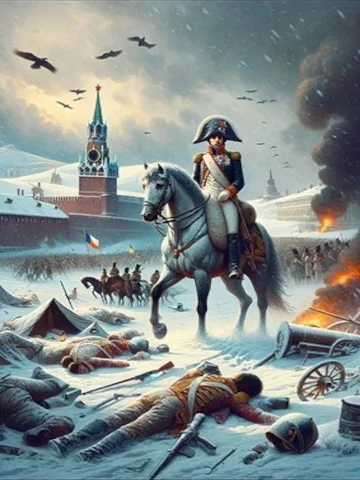
The campaign began with a rapid advance but quickly turned into a nightmare for the Great Army. Faced with a cunning resistance, French soldiers had to face successive tactical retreats organized by General Kutouzov, combined with a burning earth strategy that deprived troops of vital resources. The Russian winter, rigorous and relentless, finished decimating Napoleon's exhausted, hungry and demoralized ranks. Moscow's famous retreat, marked by massive losses, desertions and intense suffering, illustrated the burning failure of this campaign. This setback permanently weakened the Empire and marked a turning point in Napoleonic wars, announcing the decline of French domination in Europe.
The invasion of Russia in 1812 remains a poignant example of the limits of military power and the difficulty of controlling the vast expanses and extreme conditions. For Napoleon, this campaign was a painful lesson, a moment when military greatness met its own limits. The Russian failure was not only a defeat on the ground, but also the beginning of the end for the Napoleonic Empire, whose shadow would gradually fade in front of the coalition forces of its opponents.