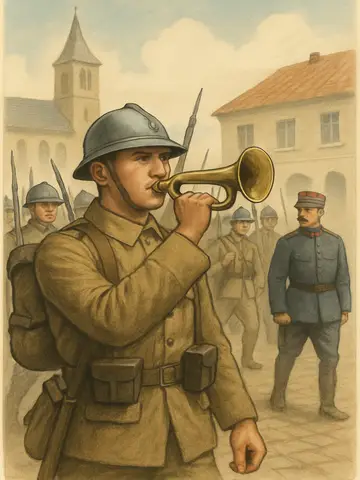



The Battle of Waterloo, which took place on 18 June 1815, marks one of the most decisive events in European history. This confrontation between the Napoleonic army and the allied forces led by the Duke of Wellington and the Prussian Marshal Blücher sealed the fate of Napoleon Bonaparte, ending his reign and imperial ambitions. Understanding the causes of this defeat and its repercussions on the continent is essential to grasp the lasting impact of this historic confrontation.
The main causes of Napoleon's defeat in Waterloo
Several factors led to Napoleon's defeat at Waterloo. First, Napoleon's strategy suffered from several weaknesses: he underestimated the speed with which Prussian forces led by Blücher could join the battlefield alongside Wellington. Moreover, coordination between his own officers was lacking, particularly with Marshal Grouchy, who was responsible for containing the Prussians but failed to prevent them from retreating to Waterloo. Moreover, the fatigue and morale of his troops were greatly affected by previous campaigns and the constant pressure of the war, which limited their effectiveness. Finally, the climatic conditions, with heavy rain making the terrain muddy, slowed down the movements of the French army and favoured the allied defenders.
Consequences of the Battle of Waterloo on Europe
Napoleon's defeat at Waterloo had a major impact on Europe's political configuration. She put a definitive end to the Napoleonic epic, leading to her abdication and exile on the island of St. Helena. On the geopolitical level, the battle confirmed the restoration of the monarchy in France with Louis XVIII and strengthened the position of the great European powers – the United Kingdom, Russia, Austria and Prussia – which established the Vienna Congress to redraw borders and balance forces to prevent any new hegemonic domination. Waterloo therefore symbolized a new era of relative stability, even though tensions between nations remained strong, laying the foundations for future conflicts in the nineteenth century.
The Battle of Waterloo remains a key moment in world history, illustrating both the end of an empire and the beginning of a new political era in Europe. Napoleon's defeat, a result of strategic, logistical and human factors, had profound effects that made the continent lasting. More than just a battle, Waterloo has become a symbol of the limits of power and the inevitable consequences of disproportionate ambitions.