


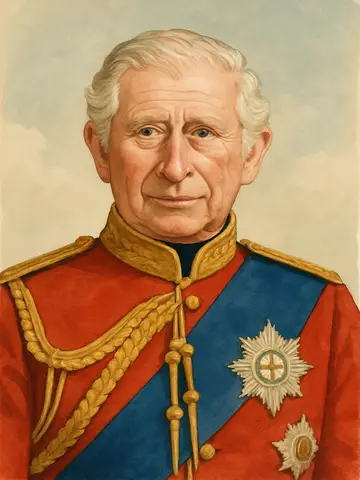
In 2022, the United Kingdom witnessed a historic turning point with Charles III's accession to the throne, marking the end of an era and the beginning of a new chapter for the British monarchy. After his mother's long and emblematic reign, Queen Elizabeth II, Charles III, met with immense expectations and heavy responsibilities, in a constantly changing global context.
Charles III's accession to the British throne in 2022
Charles III became king of the United Kingdom in September 2022, following the death of Queen Elizabeth II, who ruled for more than 70 years. His accession to the throne was both a moment of national mourning and a celebration of monarchy continuity. As a long-prepared heir, Charles immediately assumed his duties, symbolizing the stability of the British monarchy. His proclamation was marked by traditional ceremonies, while also reflecting a desire to adapt to contemporary challenges.
Challenges and hopes of Charles III's reign in the United Kingdom
The reign of Charles III promises at the crossroads between tradition and modernity. Faced with a monarchy that must reinvent itself in the face of a changing society, Charles III faced several challenges: maintaining institutional relevance, meeting ecological and social expectations, and managing complex relations with the various nations of the United Kingdom. Nevertheless, its long-standing commitment to environmental causes suggests a reign of more committed leadership and awareness of global issues, which gives hope to many British and international observers.
Charles III's accession to the throne in 2022 is much more than just a change in monarchy; This is the opening of a new chapter for the UK. Between historical heritage and contemporary challenges, his reign could redefine the place of monarchy in the twenty-first century, offering both continuity and renewal in a constantly changing world.