

India's independence in 1947 marked a major turning point in world history, symbolizing the end of nearly two centuries of British colonial rule. This historic moment not only transformed the Indian subcontinent, but also inspired many decolonization movements around the world. In order to fully understand this event, it is essential to examine the historical context in which it has entered, as well as the key steps that have led to the long-awaited freedom.
The historical context before India's independence
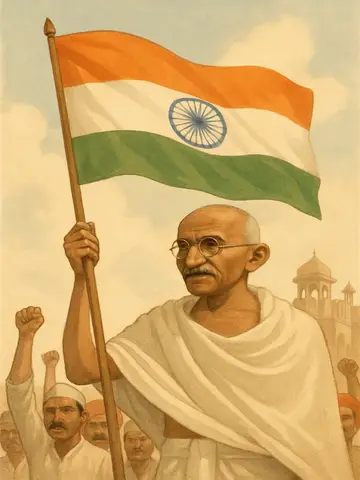
Prior to 1947, India was under the control of the British East Indies Company, then directly governed by the British Crown after the Cipayes revolt in 1857. This colonial period was marked by intense economic exploitation, but also by the spread of modern political ideas that have fostered a growing nationalist sentiment. The twentieth century saw the emergence of leaders such as Mahatma Gandhi, who advocated non-violence and civil disobedience as means of resistance. Moreover, India's religious, cultural and linguistic diversity made the quest for national unity all the more complex, posing major challenges for the future independent country.
Key events leading to freedom in 1947
The years before 1947 were marked by an intensification of demands for independence, with campaigns of civil disobedience and increased political pressure on the British government. In 1942, the Quit India movement, launched by Gandhi, demanded an immediate departure of the British. However, community tensions, especially between Hindus and Muslims, have complicated the process. The establishment of the Muslim League and the demand for a separate State led to India's partition into two nations: India and Pakistan. Finally, on 15 August 1947, India gained independence, but at the cost of painful separation and major intercommunal violence.
India's independence in 1947 remained a powerful symbol of the struggle for freedom and human dignity. Despite the challenges left by the partition, this event paved the way for building a vibrant and diversified democracy. Even today, the legacy of this liberation continues to inspire people around the world to defend their rights and aspire to a future of justice and peace.