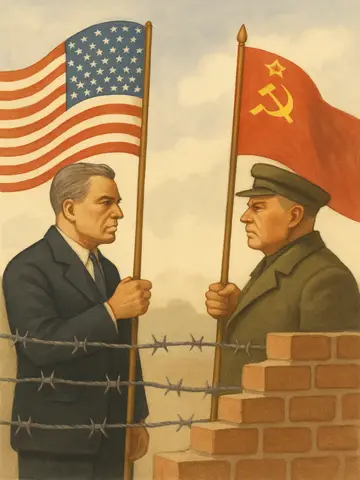


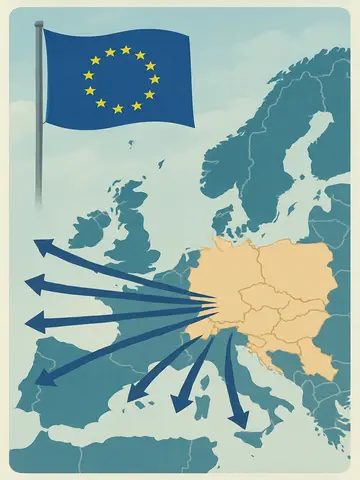
The enlargement of the European Union in 2004 marks a major historic turning point in the history of contemporary Europe. This was the largest expansion in number of countries since the creation of the European Economic Community, with the simultaneous integration of ten new Central and Eastern European States. This event symbolizes not only the reunification of the continent after the cold war, but also the consolidation of democratic and economic values in an area once divided by the Iron Curtain.
Historical context of EU enlargement in 2004
The fall of the Berlin Wall in 1989 paved the way for a profound transformation of Eastern Europe, marked by the political transition to democracy and the market economy. The candidate countries, mostly from the former Soviet bloc, have embarked on a long process of institutional reform to meet the European Union's accession criteria. These reforms were designed to ensure political stability, respect for human rights and a competitive and integrated economy. After several years of negotiations and adjustments, ten countries – Poland, Hungary, the Czech Republic, Slovakia, Slovenia, Estonia, Latvia, Lithuania, Malta and Cyprus – joined the EU on 1 May 2004. This process reflects the European commitment to building a common area of peace, prosperity and cooperation.
Political and economic impact of the 10 new East members
The integration of the ten new countries has profoundly changed the political and economic landscape of the European Union. Politically, it has strengthened the democratic dimension of the EU by integrating societies that have recently acquired freedom and national sovereignty. This has also enriched the cultural and political diversity of the Union, while posing challenges related to the coordination of common policies. Economically, these countries have brought a certain dynamism, with fast-growing emerging markets and skilled labour. However, the economic disparities between the old and the new members required reinforced cohesion policies to support regional development. Overall, this enlargement has enabled the EU to strengthen its position on the international scene, while promoting stability and prosperity in an enlarged Europe.
The 2004 enlargement remains a fundamental milestone in the history of the European Union. By integrating ten Eastern European countries, the EU not only expanded its territory and population, but also reaffirmed its role as a driving force for peace and progress on the continent. Although this enlargement has created complex challenges, it has also paved the way for a more united, diverse and prosperous Europe, embodying the hope for lasting cooperation and a shared future for all its members.