


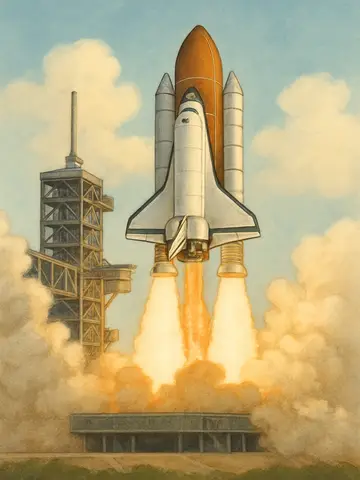
April 12, 1981 marks a memorable date in the history of space exploration with the first flight of the American Space Shuttle, Columbia. This event symbolized a new era for space travel, offering a reusable alternative to traditional rockets. This inaugural flight has generated immense enthusiasm and paved the way for many innovative space missions.
The first historical space shuttle flight in 1981
The Columbia Space Shuttle (STS-1) was launched from the Kennedy Space Centre in Florida. This mission was the first to use a reusable space vehicle, capable of taking off like a rocket and landing like an airplane. Commanded by John Young and piloted by Robert Crippen, the shuttle successfully completed a two-day flight, laying the groundwork for future missions. This flight demonstrated the ability of the shuttle to transport astronauts in space and return to Earth safely, a major technological advance at the time.
The revolutionary impact of launching the space shuttle
The success of the first space shuttle flight changed the way space missions were designed and executed. Thanks to its reusable nature, the shuttle has reduced costs and increased the frequency of space flights, facilitating complex projects such as the construction of the International Space Station and the launch of space telescopes such as Hubble. This programme has also stimulated technological research and inspired a new generation of engineers and astronauts, consolidating the human presence in space for decades to come.
The first space shuttle flight in 1981 remains a fundamental milestone in the history of space exploration. It not only proved the feasibility of a reusable space vehicle, but also paved the way for a new era of expeditions, innovations and international collaborations in space. This historic launch continues to inspire and remind us of how the conquest of space is an extraordinary human adventure.