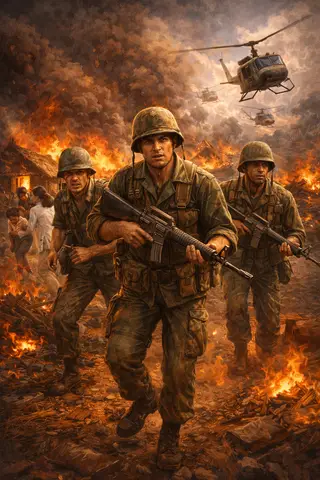


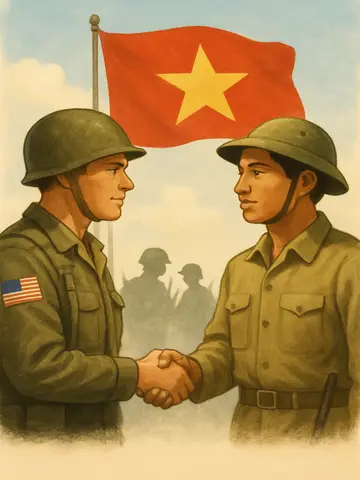
The Vietnam War, a long and devastating conflict between the Communist North supported by the USSR and China to the South supported by the United States, ended in 1975. This war, marked by an intense ideological and military struggle, has profoundly affected not only Vietnam, but also the international scene. The fall of Saigon in April 1975 symbolizes the end of this conflict and the beginning of a new era for the country and the world.
Background and causes of the end of the Vietnam War
The end of the Vietnam war is explained by several key factors. On the one hand, American engagement has gradually diminished after years of deadly fighting and high human and financial costs, causing a fatigue of public opinion in the United States. The gradual withdrawal of American troops, formalized by the Paris peace agreements in 1973, weakened South Vietnam. In addition, the North Vietnamese, led by the Communist Party, has been able to maintain fierce resistance thanks to the logistical support of its Communist allies. Finally, in 1975, the final offensive of the North allowed the capture of Saigon, putting an end to the conflict. This context shows how internal and international dynamics have come together to bring this war to an end.
Major consequences after 1975 in Vietnam and around the world
After the fall of Saigon, Vietnam was reunited under a communist regime, giving birth to the Socialist Republic of Vietnam. This political change has led to profound economic and social changes, often marked by difficulties and slow reconstruction. Internationally, the end of the Vietnam war has led to a re-evaluation of US foreign policies, marking a decline in direct US military interventionism. It has also strengthened the bipolarization of the cold war, while paving the way for new diplomatic relations. Finally, this conflict has left a lasting legacy in collective memory, both in Vietnam and in the United States, symbolizing both the complexity of modern wars and the limits of military power in the face of ideological challenges.
The end of the Vietnam War in 1975 remains a pivotal moment in contemporary history, illustrating the dramatic consequences of an ideological conflict in a divided world. Beyond Vietnam's reunification under a communist regime, this event has profoundly influenced international politics and how conflicts are perceived and conducted. The Vietnam War remains a poignant reminder of the human costs and geopolitical challenges that continue to shape the world today.