


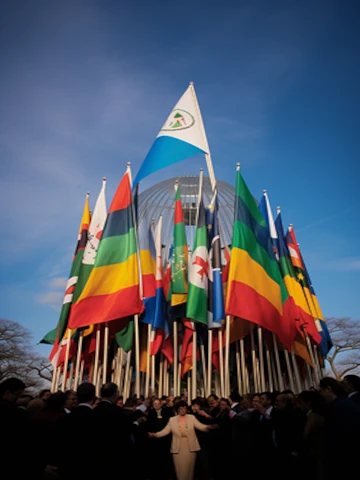
The signing of the Paris Climate Agreement in 2016 represents a major step in international cooperation to address environmental challenges. This historic agreement brought 196 countries together around a common objective: to limit global warming below 2 degrees Celsius by the end of the century, while continuing efforts not to exceed 1.5 degrees. This is an unprecedented commitment that illustrates the collective will to protect the planet for future generations.
Background and objectives of the 2016 Paris Agreement
The Paris Agreement was born from a global awareness of the devastating effects of climate change, such as rising temperatures, intensifying extreme weather events and melting polar ice. Adopted at COP21 in Paris in December 2015, and signed in 2016, this agreement aims to strengthen the global response to the climate threat by setting clear targets for reducing greenhouse gas emissions. Each country undertakes to make voluntary national contributions, adjustable every five years, in a spirit of transparency and solidarity. The agreement also includes measures to encourage adaptation to the inevitable impacts of climate change and supports developing countries in this ecological transition.
Global impact of signature on climate change
The signing of the Paris Agreement has had a major catalytic effect on the international scene by encouraging many States, businesses and communities to engage in concrete energy transition. It strengthened dialogue among nations, encouraged the mobilization of green financing and encouraged technological innovation in renewable energy and energy efficiency. Although the challenges remain considerable, this agreement has laid the foundation for coordinated and sustainable climate action. It is an essential step towards a more environmentally friendly global economy, where economic growth is no longer at the expense of the planet.
The signing of the Paris Agreement in 2016 symbolizes global unity in the face of a global emergency. By setting ambitious goals while leaving room for adaptation to individual countries, this agreement embodies a collective hope for a more sustainable future. However, its success will depend on political will, the mobilization of civil society and perseverance in concrete actions. More than just a document, the Paris Agreement is a moral and practical commitment that invites everyone to participate in safeguarding our planet.