


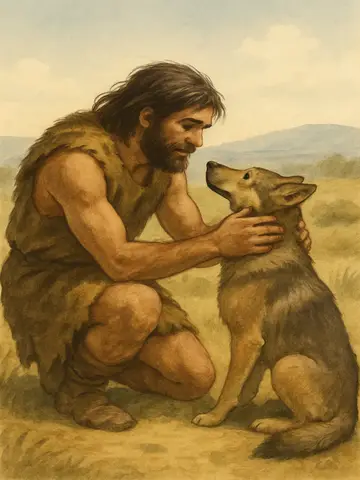
Dog domestication, which occurred about 15,000 years ago, marks a major turning point in the history of human-animal relations. This step is part of the end of the last glaciation, where nomadic human groups are beginning to diversify their lifestyles and exploit new resources.
Background and first canine domestication indices 15,000 years ago
At the end of the Upper Paleolithic, human populations live mainly hunting and gathering in a variety of environments, including Eurasia. It is in this context that the grey wolf, a social and opportunistic predator, begins to approach human settlements, attracted by food remains. The first archaeological clues, such as the bones of dogs found alongside human bones at sites such as Oberkassel (Germany), show a privileged relationship between humans and canids. This period precedes the advent of agriculture, indicating that canine domestication precedes sedentarization by several millennia.
Actors, processes and lasting impacts of dog domestication
Domestication involves a gradual selection of less aggressive and more tolerant individuals to human presence. Human groups then become active actors in this process, favouring dogs capable of attending the hunt, protecting or keeping the territory. This symbiosis profoundly alters human lifestyles by improving hunting efficiency and bringing a new social role to the animal. In the long term, dog domestication influences the cultural, symbolic and economic practices of societies, creating a lasting link. This event is a continuation of the subsequent domestication of plants and animals during the Neolithic period, and foreshadows the major social transformations resulting from it, including the birth of villages and the diversification of occupations.
The domestication of the dog 15,000 years ago is a fundamental milestone that illustrates the human capacity to change its environment and relationships with the living. It paves the way for complex changes, both cultural and economic, while consolidating a single alliance between two species.