


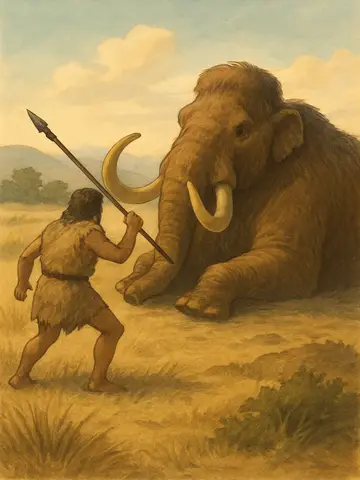
Geographical and human context prior to the disappearance of megafauna
Around -12 000 to -10 000 years, the end of Pleistocene marks a period of major climate transition with the end of the last glaciation. The vast areas of the planet, including North America, Eurasia and Australia, are home to human populations of hunter-gatherers. The latter adapt to environments rich in large animal species, called megafaunas, such as the mammoth, the sword teeth tiger, the giant lazy or the Megaloceros. These animals play a crucial role in ecosystems and in the livelihood of human groups, which develop sophisticated hunting techniques. Human pressure, combined with environmental changes, prepares the ground for a profound transformation of biodiversity and lifestyles.
Main causes and ecological impacts of extinction around -10000
The disappearance of megafauna around -10 000 years is the result of a complex interaction between postglacial global warming and human expansion. Habitat degradation due to rising temperatures results in reduced areas suitable for large species. At the same time, intensive hunting by humans, sometimes described as a hypothesis of « Overfishing »accelerate this decline. Mass extinction alters food chains and results in a reorganization of terrestrial ecosystems: the disappearance of large herbivores affects vegetation, while loss of predators affects the regulation of animal populations. These ecological changes pave the way for the gradual sedentarization of human communities that develop agriculture, a fundamental feature of neolithic societies.
===OUTRO: