


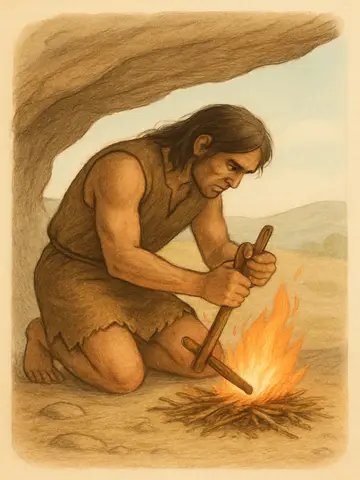
The first traces of human use of fire probably go back almost a million years. However, scientists estimate that his regular master's degree is more widespread about 400,000 years ago. This discovery marks a major step in human evolution and profoundly transforms the way of life of the first hominids.
Early humans, such as Homo erectus, probably began by observing natural fires caused by lightning or volcanoes. Gradually, they learn to keep the embers, maintain the flames, and probably light the fire themselves. This capacity requires new technical skills and reflects a significant development in human intelligence.
Fire quickly brings many advantages. It helps to cook food, making meat and some plants easier to digest and more nutritious. This improved diet probably contributed to the development of the human brain. Fire also provides heat and light, allowing human groups to survive in colder areas and extend their activities after dark.
Fire also becomes a central element of social life. Homes serve as gathering places where humans exchange, tell stories and share knowledge. This collective life around the flames would have promoted the development of language and strengthened the links between the members of the group.
Finally, the fire transforms the environment: hardening peaks into wood, removing predators, lighting caves or setting up camps. Gradually, it becomes indispensable for the survival and development of human societies.
Fire control thus represents one of the greatest advances in prehistory. Much more than just a source of heat, it paves the way for many technical, social and cultural innovations that will lastingly mark the history of humanity.