


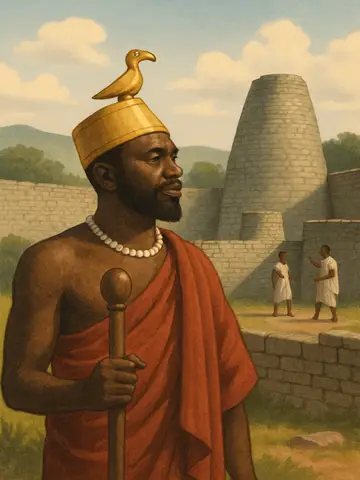
Historical and geographical context of Greater Zimbabwe around 1300
At the beginning of the fourteenth century, Greater Zimbabwe established itself as a major political and commercial centre in southern Africa. Located in the current Zimbabwe, this site enjoys a strategic geographical position between inland gold-producing regions and ports on the east coast, facilitating trade with Arab and Indian traders. Before 1300, the region had seen the gradual emergence of powerful chiefdoms that consolidated their power through control of commercial roads. The regional context is marked by the rise of societies organized around agriculture, livestock and crafts, preparing the ground for the climax of Greater Zimbabwe. This context is part of a network of trans-Saharan and oceanic exchanges that enrich local culture and strengthen political structures.
Political and economic peak of the Kingdom of Greater Zimbabwe
Around 1300, Greater Zimbabwe reached its peak, characterized by a centralization of power around a ruling elite that controls the wealth extracted from gold and copper. The kingdom establishes a complex administrative system and develops monumental architecture, including the famous dry stone walls, symbols of its power. This economic prosperity rests on a flourishing trade with traders from Arabia, India and even China, exchanging gold, ivory and slaves for manufactured goods. Politically, the royal power asserts itself as a guarantor of order and prosperity, which promotes social cohesion and territorial expansion. In the long term, this organization contributes to the dissemination of technical and cultural knowledge in the region, preparing the rise of neighboring kingdoms such as the Mutapa. The climax of Greater Zimbabwe also illustrates the dynamics of economic and cultural integration that precede European colonization, marking a crucial milestone in the history of Southern Africa.