

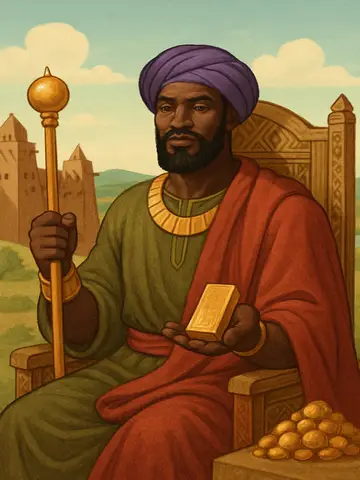
The climax of the Empire of Mali in 1324 marks a key moment in West African history, symbolized by the territorial extent and wealth of the kingdom during the reign of Mansa Moussa. This context fosters political consolidation and economic expansion, establishing Mali as a major player in the region.
Historical and political context before the peak of 1324
Before 1324, the Empire of Mali rose rapidly following the fall of the Empire of Ghana and internal conflicts in the region. Founded in the 13th century by Soundiata Keïta, Mali controls important trans-Saharan trade routes, including gold and salt. At the edge of the 14th century, the kingdom extended from the Senegal River to the Niger loop, integrating various prosperous populations and cities such as Timbuktu and Gao. Politically, tribal unification under a centralized monarchy promotes stability, while Islam spreads as a factor of cultural and diplomatic integration with the Muslim world.
Key Facts and Consequences of Mansa Moussa Pilgrimage
In 1324 Mansa Moussa began hajj in Mecca, a major historical event that revealed the power and wealth of Mali. Accompanied by an impressive caravan, it distributes gold generously in the cities crossed, notably in Timbuktu and Egypt, causing temporary inflation. This pilgrimage strengthens Mali's international reputation, establishes diplomatic ties with Mamluk Egypt and encourages cultural and religious development in Timbuktu, which becomes an intellectual center. This trip also demonstrates the importance of Islam in the foreign policy of the kingdom.
The climax of Mali in 1324 illustrates a moment of political and economic influence that has a lasting impact on West Africa. The pilgrimage of Mansa Moussa remains a major reference for understanding the dynamic of cultural and commercial expansion in the African medieval context, in continuity with the previous empires and the spread of Islam.