

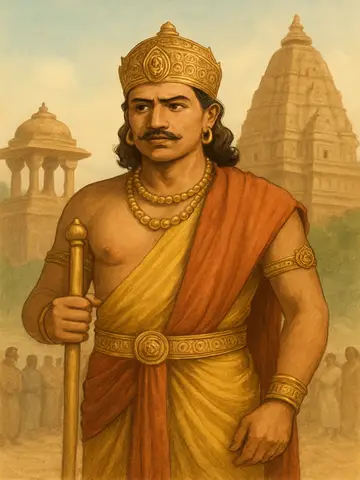
The Gupta Empire, which flourished around the year -550, is recognized as one of the largest and most influential empires in ancient Indian history. This period, often called Gupta, marks a golden age characterized by exceptional cultural, scientific and political development. A review of this remarkable development that has long-term shaped Indian civilization.
The remarkable rise of the Gupta Empire around -550
Around -550, the Gupta Empire began to distinguish itself by its rapid expansion and territorial consolidation in northern India. Under the leadership of powerful leaders like Chandragupta I, the Gupta managed to unify several small kingdoms under one authority, creating a stable and prosperous empire. This period was marked by major advances in the fields of art, literature and religion, with a revival of Hinduism and the support of scholars and artists. Economic growth was also notable, thanks to developed trade routes and flourishing agriculture, providing the necessary resources to support this golden age.
Keys to power and prosperity gupta at -550
The success of the Gupta Empire around -550 is based on several essential factors. First, the Gupta's skilful political strategy, based on marriage alliances and a centralized administration, maintained strong internal cohesion. Second, their ability to promote trade, both within the subcontinent and with foreign territories, stimulated wealth and innovation. Moreover, the Gupta have been able to encourage science and the arts, attracting famous scholars like Aryabhata, who have contributed to remarkable progress in astronomy and mathematics. Finally, support for the Hindu religion has strengthened their legitimacy and cultural unity of the empire, creating a common identity that has continued well beyond their peak.
Thus, the climax of the Gupta Empire around -550 established itself as a pivotal period in Indian history, marking a golden age in which politics, culture and economy combined to build a lasting and influential empire. Their legacy continues to be celebrated for its major contributions to Indian and global civilization.