

Historical and geopolitical context of Sacsayhuamán around 1450
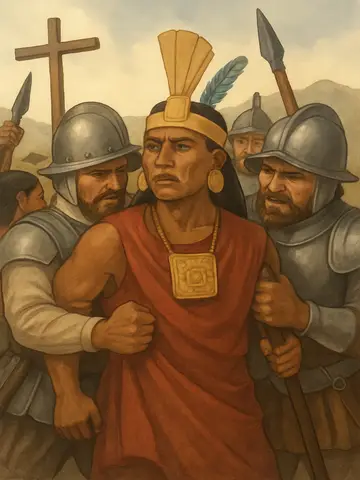
Around 1450, the Inca Empire, under the reign of Pachacútec, expanded rapidly in South America. Located on a plateau overlooking the city of Cusco, the Inca capital, Sacsayhuamán fortress is built in a context of consolidation of centralized power. This period is marked by the unification of the Andean peoples and the extension of the Inca borders, including distant regions such as Chinchaysuyu, the largest of the four Suyu. This expansion involves both military campaigns and architectural projects aimed at establishing the political and religious domination of the Empire. Sacsayhuamán embodies this control strategy: a defensive and ceremonial site, symbol of the Inca power in the face of internal and external threats, including rebel populations and enemy incursions.
Construction and strategic functions of the Inca fortress
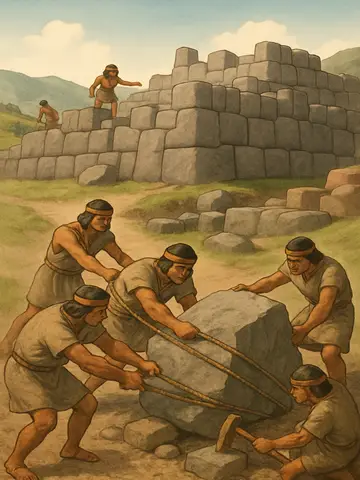
The construction of Sacsayhuamán began around 1440 and was completed around 1450, under the direct supervision of Pachacútec and his engineers. The building is distinguished by its gigantic stone blocks finely cut and assembled without mortar, testimony to an advanced technical mastery. The fortress served as both a military bastion and a ceremonial centre. It protected Cusco from invasions and controlled the region's strategic roads. Its zigzag walls increased resistance to assaults. Sacsayhuamán's dominant position also allowed him to monitor the conquered territories. In the long term, the fortress contributed to the political and cultural integration of the Inca Empire, supporting major religious events, such as the Inti Raymi festival. It also bears witness to Andean know-how and centralized power before the Spanish conquest, which will begin in the sixteenth century.
===OUTRO: