


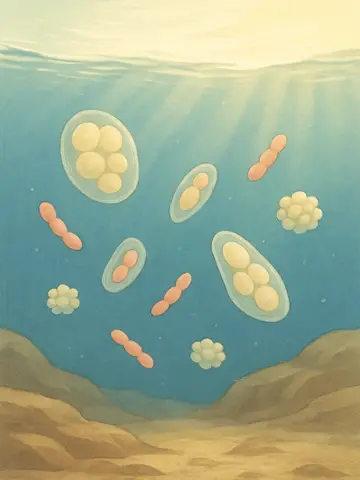
The emergence of multicellular organisms, about 600 million years ago, marks a major step in the evolution of life on Earth. This transition has transformed biodiversity and paved the way for more complex and diverse life forms.
Geological and biological context prior to multicellular appearance
Before this period, life was limited mainly to simple single-cell organisms, such as bacteria and algae. The Earth was then characterized by nutrient-rich oceans and an atmosphere containing progressively more oxygen, a key factor for more effective cell metabolism. This favourable environmental environment allowed cells to build stable colonies, the first forms of multicellularity. This step is part of the end of the Cryogenian period, marked by intense glaciations, followed by a gradual warming of climatic conditions which stimulated biological diversification.
Evolving consequences and links with other key events
The emergence of multicellular organisms led to an explosion of biological complexity, prelude to the appearance of the first true animals during the Ediacarian and later to the Cambrian fauna. This evolution is the basis of modern ecosystems. It is linked to the increase in atmospheric oxygen content and the formation of specialized cellular structures, promoting tissue differentiation. This phenomenon precedes the rapid diversification of organisms in Cambrian (-540 Ma), which has amplified marine biodiversity. In addition, it is part of the continuity of the major transformations of the biosphere, such as the oxygenation of the atmosphere at the beginning of the Paleoproterozoic, and announces the future ecological upheavals that will influence the planet.
The emergence of multicellular organisms represents a fundamental evolutionary shift, paving the way for the biological complexity and diverse ecosystems that we are experiencing today. This stage perfectly illustrates the interdependence between geological, chemical and biological conditions in the history of life on Earth.