

The late Devonian extinction, which occurred about 372 million years ago, is a major biological crisis that has profoundly altered marine and terrestrial biodiversity. This extinction is part of a geological context marked by significant environmental changes related to the tectonic, climate and chemical composition of the oceans.
Late Devonian Geological and Bioclimatic Context
At the end of the Devonian, the Earth experienced a dynamic geological configuration with the progressive formation of the Euramerica supercontinent. This period is characterized by high volcanic activity and severe climatic fluctuations, including glaciation episodes. These disturbances cause sea levels to decline, reducing coastal marine habitats, which are essential for many species. In addition, increasing the proliferation of terrestrial plants alters atmospheric composition, particularly oxygen and carbon levels, impacting ocean chemistry and contributing to the stress of aquatic ecosystems.
Major consequences and legacy of extinction -372 Ma
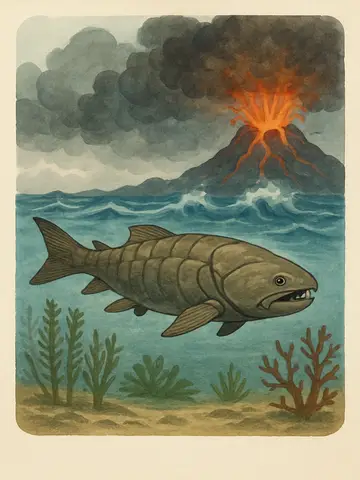
This extinction mainly affects marine life, eliminating about 70% of species, including many coral reefs and placoderm fish. Benthic and pelagic communities are deeply disturbed, paving the way for an ecological reorganization that facilitates the subsequent emergence of bonefish and early tetrapods. Late Devonian extinction precedes the more devastating crisis of the late Permian (-252 Ma), and reveals the complex interactions between tectonics, climate and life. It also illustrates the importance of rapid environmental changes in the evolution of biodiversity, a central topic in modern paleontological studies.
===OUTRO: