

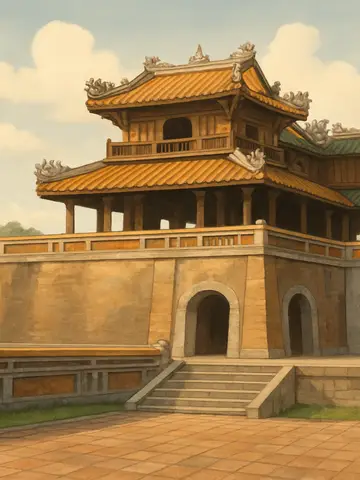
The Imperial Palace of Hue, the historic jewel of Vietnam, embodies the climax of the Nguyen dynasty, which profoundly marked the country in the early 19th century. In 1803 this majestic chamber was much more than just a royal residence: it was the political, cultural and ceremonial heart of the new imperial capital. Let's dive into the fascinating history of this iconic place and discover how its architecture reflects the values and power of the era.
The fascinating history of the Imperial Palace of Hue in 1803
In 1803 under the reign of Emperor Gia Long, the Imperial Palace of Hue was the key centre of Vietnam's unification. After decades of war and fragmentation, Gia Long founded the Nguyen Dynasty and chose Hué as its capital. The palace, surrounded by moat and fortifications, became the symbol of the restored stability and imperial sovereignty. This year marks a period when the palace consolidated its political status while hosting solemn ceremonies and diplomatic receptions. It was then the scene of the great decisions that would shape the destiny of Vietnam.
Architecture and the role of the Imperial Palace under Nguyen
The architecture of the Imperial Palace of Hue harmoniously blends Vietnamese traditional aesthetics with Chinese influences, reflecting the authority and spirituality of the Nguyen dynasty. In 1803 its main buildings, such as the Forbidden Purple City, were designed according to strict principles of symmetry and hierarchy, intended to impress visitors and subjects. Each pavilion, each door, had a symbolic meaning linked to imperial power. Moreover, the palace played an essential role: it housed not only the royal family, but also the administrative offices and ceremonial spaces, thus consolidating political and cultural unity during the reign of the Nguyen.
The Imperial Palace of Hue in 1803 remains a living testimony of Vietnamese history, the greatness of the Nguyen dynasty and the unique architectural heritage they left behind. More than just a set of buildings, this palace represents the soul and identity of a nation that, after a period of tumult, has been able to reinvent itself and assert itself on the world stage. Today, he continues to inspire and marvel, strongly recalling the importance of preserving this exceptional heritage.