

The beginnings of the quaternary glaciations mark a major step in Earth's climate change, which occurred about 2.6 million years ago. This period inaugurates a succession of alternations between glacial and interglacial phases that make lasting changes in landscapes, ecosystems and human lifestyles.
Geological and climatic context before quaternary glaciations
Before the beginning of the quaternary glaciations, the planet has a warmer and stable overall climate. The late Pliocene saw a gradual decrease in temperatures due to changes in ocean and atmospheric circulation, as well as the progressive formation of ice caps in Antarctica. This transition prepares the Earth for more rigorous climatic cycles, favored by variations in terrestrial orbit (Milakovitch cycles) influencing seasonal sunshine. Geographically, continents continue to drift, affecting marine currents and climate. This fragile context paves the way for the appearance of the first great glaciations.
Consequences and impacts of the first major glaciations
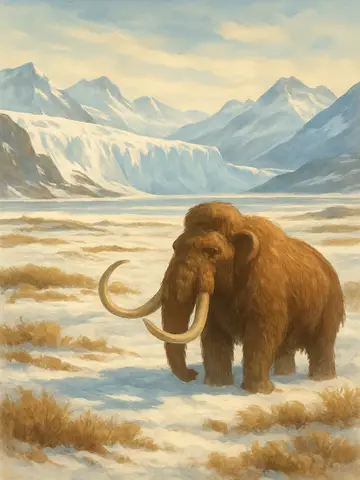
The appearance of quaternary glaciations causes a significant cooling of temperatures, with the massive extension of glaciers in North America, Europe and Asia. This advance of the ice caps profoundly alters the reliefs by erosion and deposition of materials, creating U-valleys, moraines and important alluvial plains. Biologically, species must adapt or migrate, which influences human evolution: environmental pressure favours the development of hominids capable of adapting to these harsh conditions. Politically and culturally, while the direct trace is difficult to establish, climate change upsets living conditions, forcing populations to change their hunting and collection strategies.
Historical links
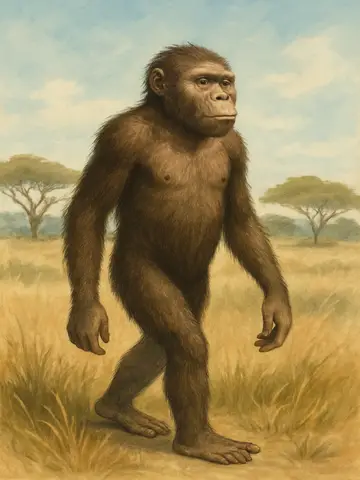
The beginning of the quaternary glaciations is closely related to the formation of the Antarctic cap about 34 million years ago, which initiated a progressive global cooling. It also prepares the context of Pleistocene glaciations, affecting species diffusion and human biogeography. Finally, it serves as a climate framework for the early evolution of the Homo genus, notably with Homo habilis, and for subsequent human migrations outside Africa, influenced by the glacial/interglacial alternation.
The beginning of the quaternary glaciations is a fundamental climate shift, leading to a series of major geographical and biological transformations that will shape the planet and the human trajectory for the next millions of years.