

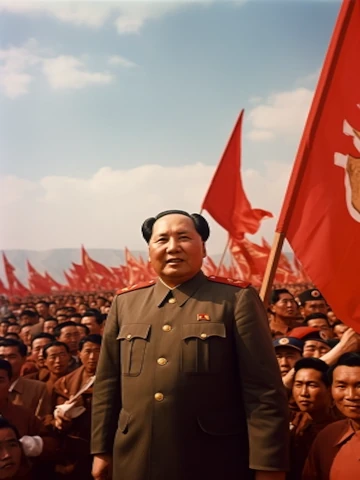
The Long March is one of the most emblematic episodes of modern Chinese history, symbolizing the Chinese Communist Party's perseverance and revolutionary strategy. In 1934, faced with intense repression by the Kuomintang, Mao Zedong took part in a decisive strategic retreat, which would forever transform the trajectory of the communist movement in China. This article reviews the historical context of the Long March and the crucial role Mao played in this epic.
Historical context of the Long March (1934-1935)
In 1934, China was plunged into a period of civil war between the Kuomintang (nationalist party) of Chiang Kai-shek and the Communist forces. After the breakup of the alliance between these two factions, the Kuomintang launched a severe purge campaign against the communists, forcing them to retreat to survive. It is in this context of violent confrontation and political siege that the Long March senitises. This withdrawal of thousands of kilometres from the south to the north of the country is primarily a survival manoeuvre, designed to escape the encirclement of nationalist forces while preserving the structure and ideology of the Communist Party.
Mao Zedong's decisive role during the march
Mao Zedong quickly illustrates himself as an indispensable leader during the Long March. Its ability to inspire troops and develop military strategies adapted to extreme conditions is crucial to the success of this odyssey. Unlike other Party members who favoured more conventional tactics, Mao focused on mobility, adaptation to the field and mobilization of local populations. This leadership not only saves most of the communist forces, but also strengthens Mao's political position within the Party. The Long March thus becomes a turning point where Mao imposes himself as the main guide of the Chinese revolution, redirecting the movement towards a more pragmatic and popular vision.
The Long March of 1934-1935, led by Mao Zedong, is more than just a military retreat: it embodies the resilience and ingenuity of the Chinese Communist Party against adversity. This heroic journey not only forged the identity of the revolutionary movement, but also established Mao as the central figure that would lead China towards a profound political and social transformation. Thus, the Long March remains a pivotal moment in Chinese 20th century history, a story of survival and triumph that continues to inspire.