


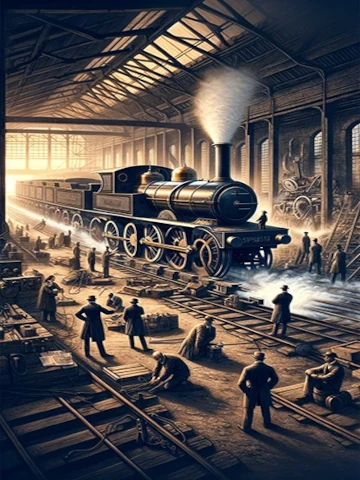
The invention of the locomotive in 1804 marks a crucial step in the history of transport and industry. This innovation paved the way for an unprecedented technological and economic revolution, transforming the way men moved and traded their goods. A review of the origins of this iconic machine and its profound impact in the early 19th century.
The origins of the locomotive in 1804
The first functional steam locomotive was developed by British engineer Richard Trevithick in 1804. Unlike the first stationary steam engines, Trevithick had the idea of driving a vehicle on rails, thus allowing more efficient and rapid transport. His locomotive was the first time on the tracks of a coal mine in Wales, demonstrating that steam could propel a train independently. This invention was born out of an economic necessity: to improve the transport of heavy materials such as coal, essential at the time to fuel the booming industries. The success of this approach quickly attracted attention, laying the foundation for a new mode of travel.
The revolutionary impact of the steam engine
The introduction of the steam locomotive in 1804 was the catalyst for a real industrial and social revolution. By facilitating the transport of goods and passengers over long distances at speeds well above those of traditional means, it contributed to the expansion of rail networks across the United Kingdom and gradually the rest of the world. This innovation significantly reduced transport costs, thereby boosting trade and industrialization. In addition, the locomotive profoundly changed landscapes and lifestyles, bringing cities closer together and stimulating urbanization. In short, Trevithick's invention was not merely a technical feat, but the starting point for a radical change in 19th-century society.
The invention of the locomotive in 1804 by Richard Trevithick remains a fundamental milestone in the history of transportation technologies. It has transformed not only the methods of displacement, but also the economic and social organization of nations. Even today, the locomotive symbolizes the spirit of innovation and progress that have shaped the modern world.