

The execution of Louis XVI in 1793 represents a key moment in the French Revolution, marking the symbolic end of the Old Regime and the beginning of a new political era. This historic event profoundly upset France and its monarchy system, while causing very strong international reactions. To understand the importance of this execution, it is essential to revisit the trial of Louis XVI, a decisive step leading to his conviction.
The trial of Louis XVI: a decisive step in 1793
The trial of Louis XVI, which began in December 1792, was a crucial moment in the French Revolution. Accused of high treason and conspiracy against public freedom, the fallen king was judged by the National Convention, an elected revolutionary assembly. This trial was exceptional in its political and symbolic intensity, for it questioned the very legitimacy of the monarchy. Louis XVI, once a symbol of royal absolutism, was confronted with his actions, including his attempt to flee to Varennes and his contacts with foreign powers hostile to the Revolution. Despite his defence, the majority of deputies voted in favour of his death sentence, illustrating the definitive break between the people and the monarchy.
The execution of Louis XVI: the end of a French monarchy
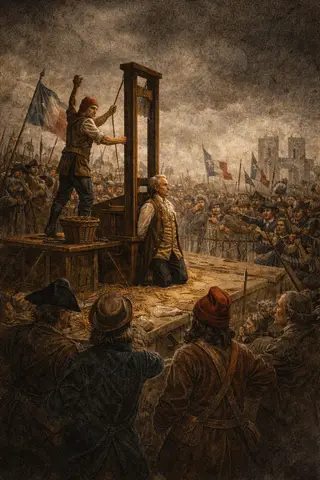
On 21 January 1793 Louis XVI was executed on the Place de la Révolution (now Place de la Concorde) in Paris, by guillotine. The execution marked the official end not only of the reign of Louis XVI, but also of the traditional monarchy in France. This solemn act was charged with revolutionary symbolism: it meant the triumph of popular sovereignty over the divine right of kings. However, this death also had dramatic repercussions, triggering the Vendée war and causing a deep division within French society. Internationally, the execution of the king aroused hostility among European monarchies, leading to a coalition against revolutionary France. Thus, the death of Louis XVI was a major turning point, announcing a period of radicalization and political violence.
The execution of Louis XVI in 1793 remained a fundamental historical episode that embodied the break between the Old Regime and the nascent Republic. This strong political gesture symbolized the rise of the revolutionary ideals of freedom and equality, while opening the way for a new but tormented France. More than two centuries later, the memory of this event continues to generate debate and reflection on the issues of power, justice and democracy.