


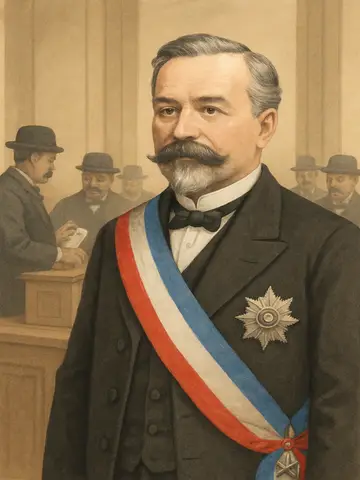
In 1899, France went through a particularly troubled political period, marked by internal tensions and multiple crises. It is in this delicate context that Émile Loubet is elected President of the Republic, embodying a hope of stability and reconciliation for the country. His election marks an important turning point in French political history, with a head of state anxious to restore national unity.
Émile Loubet : A new president for France in 1899
Émile Loubet was elected president of the French Republic in 1899, succeeding Felix Faure. An experienced politician, he has a long and respected career, particularly as a senator and president of the Senate. His reputation as a moderate and conciliatory man plays a key role in his election, while France is deeply divided by the Dreyfus case. Loubet embodies a new breath, capable of bringing together the various political factions around the Republic. His mandate thus opens up in an atmosphere of renewal, with the ambition to pacify a country that is plagued by ideological conflicts.
The major challenges of Émile Loubet's presidential mandate
The mandate of Émile Loubet is marked by several challenges that he faces with caution and diplomacy. The question of the Dreyfus case remains central: the president works to ease the tensions between dreyfusards and antidreyfusards, seeking to turn this painful page. It must also manage international relations in a complex European context, particularly with Germany and the rise of military alliances. Internally, Loubet supports social reforms and the consolidation of republican institutions. Its ability to maintain a balance between opposing political forces helps stabilize France for an uncertain period.
Émile Loubet, elected in 1899, remains a key figure in the Third French Republic. Its mandate illustrates the importance of dialogue and moderation in a country shaken by social and political conflicts. Through his commitment to reconcile the nation, he paved the way for a more peaceful France, thus giving a new impetus to the Republic at the dawn of the twentieth century.