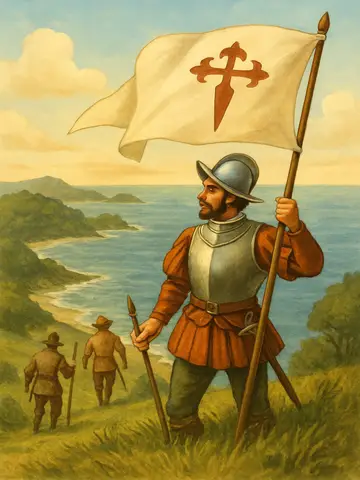
The discovery of the Pacific Ocean by Vasco Núñez de Balboa is a landmark event in the history of great explorations. Although this initial discovery dates from the beginning of the 16th century, a symbolic expedition conducted in 1968 revived the importance of this historic crossing. This article reviews Balboa's voyage to the Pacific Ocean in 1968 and the major discoveries that were highlighted during this adventure.
Balboa expedition to the Pacific Ocean in 1968
In 1968, a commemorative expedition was organized to trace the course of Vasco Núñez de Balboa, the first European to see the Pacific Ocean from the American continent in 1513. This expedition, both scientific and historical, aimed to better understand the conditions of the era and to celebrate this monumental feat. The team sailed through the same regions as Balboa, exploring the lands and waters of the Darien, in present-day Colombia and Panama. This trip highlighted the geographical and climatic challenges faced by 16th century explorers, while enhancing the cultural and historical value of this discovery.
Major discoveries during the historic crossing
During the 1968 expedition, the researchers rediscovered not only the roads used by Balboa, but also the remains and testimonies of indigenous civilizations living at the time. These discoveries have enriched the region's knowledge, particularly as regards the interactions between local populations and European invaders. At the maritime level, the expedition provided a better understanding of navigation through the tumultuous waters of the Eastern Pacific, as well as the ecological impact of the crossing. This rediscovery offered a renewed perspective on the historical and geographical importance of the Pacific in the world history of explorations.
The 1968 expedition served as a bridge between the past and the present, reminding the world of the importance of Balboa's discovery of the Pacific Ocean. By revisiting this founding moment, it allowed us to deepen our understanding of the challenges faced by the first explorers and to celebrate their courage in the face of the unknown. More than just a tribute, this historic crossing reinforced the importance of preserving the natural and cultural heritage of the regions explored, while inspiring new generations to continue exploration and discovery.