

The beginning of World War I in 1914 marked a pivotal period in world history, when tensions accumulated for decades finally erupted into a conflict of unprecedented magnitude. Understanding the immediate causes of this war as well as the first military mobilizations makes it possible to better grasp the scale and brutality of the conflict that was going to upset Europe and the world.
The Imminent Causes of the Early War in 1914
The immediate causes of the outbreak of the First World War lie in an extremely tense political and diplomatic context. The assassination of Archduke François-Ferdinand of Austria-Hungary in Sarajevo on 28 June 1914 was the spark that lit the European powder magazine. However, this event was only the catalyst for a set of nationalist, imperialist and military rivalries. Inflexible alliances between major powers, such as the Triple-Entente (France, Russia, United Kingdom) and the Triple-Alliance (Austria, Germany, Hungary, Italy), quickly transformed a local crisis into a general war. Moreover, the rise of nationalism in the Balkans and the arms race have helped to make the international climate extremely unstable.
The First Conflicts and Mobilizations in August 1914
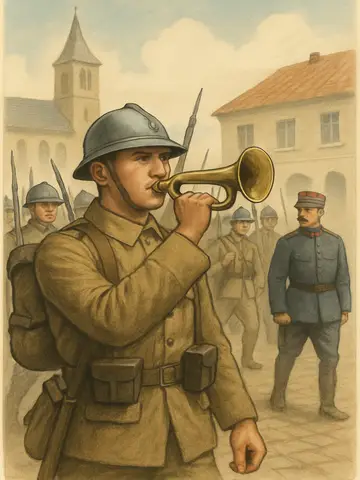
As early as August 1914, the great European powers launched themselves into a massive mobilization of their armies. Germany launched hostilities by invading neutral Belgium to quickly reach France, according to the Schlieffen plan, resulting in the entry into war of the United Kingdom. In parallel, Russia mobilized its forces to support Serbia against Austria-Hungary. The first battles were marked by an intense war of movement, with rapid offensives followed by a progressive slur in the trenches. These early clashes already showed the violence and complexity of a four-year war, killing millions and redefining Europe's political borders.
The outbreak of World War I in 1914 was the result of a complex entanglement of political, military and social causes. The first months of the conflict laid the foundations for a long and deadly war, the consequences of which were to mark the twentieth century. To study this tragic beginning is to better understand the mechanisms of war and the lessons to be learned for the future of world peace.