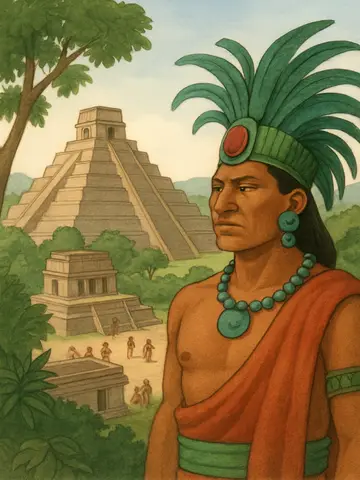


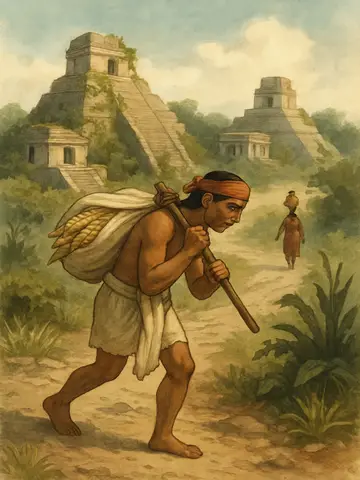
Maya civilization, famous for its advances in astronomy, architecture and writing, has left behind impressive cities in the heart of Meso-America. Yet, between the eighth and ninth centuries (about 750–900), many of these large cities were suddenly abandoned, plunging archaeologists and historians into a deep mystery. This article explores the possible reasons for this mass exodus and the consequences of this abandonment which marked the end of a flourishing era.
The mysterious reasons for the abandonment of large Mayan cities
Several theories attempt to explain why the large Mayan cities were deserted between the eighth and ninth centuries (around 750–900). One of the most accepted assumptions is climate change: prolonged periods of drought would have seriously affected agriculture, the main source of livelihood for people. In addition, deforestation and overexploitation of land would have impoverished the environment, making urban life difficult. In addition to this, the internal conflicts between city-states for the control of resources, which would have destabilized Maya society. Finally, some researchers refer to the pressure exerted by the first European incursions, which could accelerate the decline. These combined factors created an unsustainable environment, forcing people to leave their cities to seek better living conditions elsewhere.
Consequences of the disappearance of urban centres around 750–900
The abandonment of large Mayan cities has had a profound impact on the region and its cultural heritage. From a social point of view, this desertion marked the end of the great political and religious structures that made the strength and unity of Mayan civilization. Knowledge related to writing and rituals was largely lost or transmitted in a fragmentary manner. Territorially, the tropical forest has gradually invaded the ruins, concealing them for centuries and allowing their natural conservation. Today, these vestiges are a valuable source for understanding this disappeared civilization and a poignant testimony of its past glory. Finally, abandonment has also altered the dynamics of Amerindian populations, which have reorganized into smaller and dispersed communities, lastingly influencing the region's culture.
The abandonment of large Mayan cities between the eighth and ninth centuries (ca. 750–900) remains a fascinating and enigmatic episode of Mesoamerican history. While the exact causes remain subject to debate, it is clear that this phenomenon has profoundly transformed not only the Mayan civilization, but also the cultural and natural landscape of the region. Through the study of these ghost cities, we continue to better understand the challenges that humanity faces when adapting to major environmental and social changes.