

The fall of the Berlin Wall in 1989 represents a key moment in modern history, symbolizing the end of Germany's division and the beginning of a new era in Europe. This wall, erected in 1961, had not only physically separated East Berlin and West Berlin, but had also crystallized the tensions of the Cold War. The November 1989 event was not only the destruction of a concrete barrier, but a powerful symbol of freedom found and a catalyst for German reunification and the end of the communist regime in the region.
Historical background before the fall of the Berlin Wall
After the Second World War, Germany was divided into two states: the Federal Republic of Germany (FRG) in the West, capitalist and democratic, and the German Democratic Republic (RDA) in the East, under Soviet influence and communist regime. Berlin, at the heart of this division, was itself divided into allied sectors, with a strong contrast between freedom in the West and repression in the East. Built in 1961 to prevent the mass exodus of East Germans to the West, the Berlin Wall became the symbol of the Cold War, embodying ideological, political and social separation. However, throughout the 1980s, movement for reform and growing international pressure began to weaken this rigid system.
Key events in November 1989 in Berlin
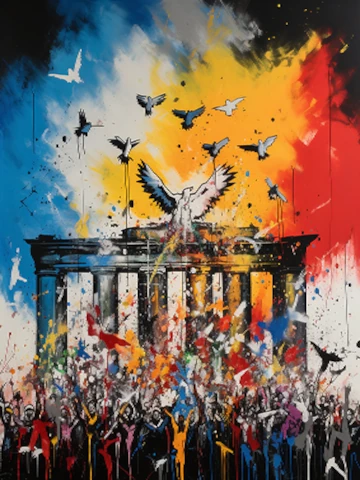
On 9 November 1989, following a clumsy statement by a spokesman for the East German government concerning new travel rules, a huge crowd gathered spontaneously at the crossing points of the wall. Faced with this popular overflow, the outdated East German authorities finally opened the borders. Thousands of East Berliners then crossed the barrier towards West Berlin, joyfully celebrating the freedom they had regained. The progressive demolition of the wall began immediately, while the world witnessed a major political change. This event was the prelude to official German reunification in 1990 and marked the irreversible decline of communist regimes in Eastern Europe.
The fall of the Berlin Wall remains a powerful symbol of the struggle for freedom and democracy. It embodies the end of an era of division and the birth of a unified Europe. More than just a fallen wall, this event inspired generations to believe in the possibility of change and the strength of the people to break down the barriers, whether physical or ideological. Even today, the November 1989 memory continues to inform our understanding of freedoms and human rights.