


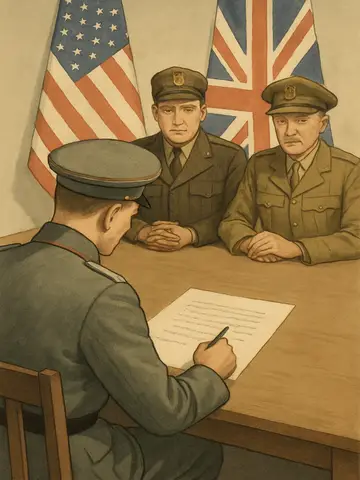
The German surrender in 1945 marks the end of a devastating global conflict that has upset the political, social and economic order of the planet. This historic event symbolizes the Allied victory over the Nazi regime and paves the way for a new era of reconstruction and peace. A review of the decisive moments that led to this surrender and the lasting impact it has had on the world.
Key events leading to German surrender
From 1944, Allied forces increased offensives against Nazi Germany, notably with the landing in Normandy in June 1944. Progressively, the Soviet armies advanced eastward, freeing the occupied territories and encircling Berlin. It tightens around the German capital, which is under heavy bombardments and fierce fighting. On April 30, 1945, Adolf Hitler committed suicide in his bunker, symbolizing the end of the Nazi command. Finally, on 7 May 1945, unconditional surrender was signed in Reims and ratified on 8 May in Berlin, officially marking the end of the Third Reich and the allied victory in Europe.
Consequences of the end of World War II in 1945
German capitulation led to a major transformation of global geopolitics. Europe is devastated, with millions of deaths and infrastructure destroyed, requiring massive reconstruction. The Nuremberg trial opened to try Nazi war crimes, affirming the importance of international law. At the political level, Germany is divided into areas of occupation, prelude to the cold war between the United States and the USSR. The end of the conflict also marked the beginning of decolonization and the creation of international organizations such as the United Nations, designed to prevent future wars. Thus, the German capitulation of 1945 is both the end of a drama and the starting point of a new world order.
The German capitulation of 1945 remains a pivotal moment in contemporary history. It symbolizes the fall of a totalitarian regime and the victory of freedom against barbarism. More than just a military conclusion, this act has profoundly changed the face of the world, laying the foundations for a fragile but fundamental peace for decades to come. Even today, remembering these events makes it possible to better understand the current issues and the importance of peace.