


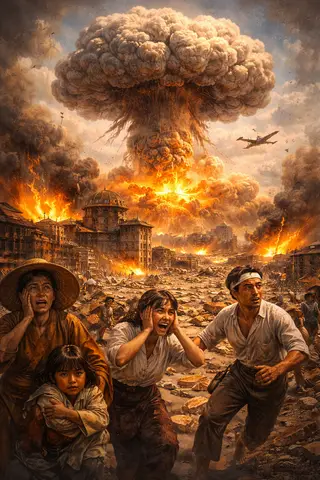
On August 6, 1945, Hiroshima was the scene of a tragic event that marked world history forever. The first military use of the atomic bomb caused massive destruction and a profound shock, both human and environmental. This article explores the devastating impact of this nuclear weapon on Hiroshima and its consequences in 1945.
The devastating impact of the atomic bomb on Hiroshima
On August 6, 1945, at 8:15 a.m., the American plane Enola Gay dropped the atomic bomb nicknamed « Little Boy » above Hiroshima. The explosion was equivalent to about 15,000 tons of TNT, instantly destroying much of the city. The power of the detonation generated a huge fireball and a shock wave capable of shaving everything over its passage within a radius of several kilometres. Buildings, infrastructure and housing have been sprayed, leaving room for a smoky landscape of ruins. This attack demonstrated the unprecedented destructive force of nuclear weapons and profoundly altered the conception of armed conflict.
Human and environmental consequences in 1945
The human consequences of the explosion were terrible and immediate. It is estimated that 70,000-80,000 people died instantly, victims of burns, collapse of buildings and radiation. Survivors faced longer-term effects, such as radiation-related diseases, including cancer and congenital malformations. Environmentally, the bomb has contaminated the city with lasting contamination, rendering certain areas uninhabitable and affecting local fauna and flora. The disaster has also left deep psychological consequences for both the people and the world, inaugurating an era of awareness of the dangers of nuclear weapons.
The atomic bomb dropped on Hiroshima in 1945 remains a powerful symbol of the horrors of nuclear war. Its devastating impact has transformed not only a city, but also the way humanity perceives war and peace. Remembering this tragedy, the world is called upon to work for a future where such weapons will never be used again.