


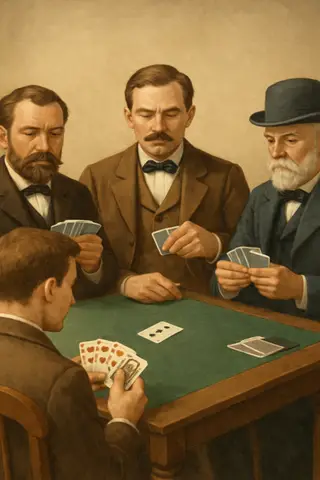
The appearance of bridge in 1870 marks an important step in the history of card games, introducing a new way of playing that would quickly seduce lovers of strategy and friendliness. This game, born in the 19th century, is part of an ancient playful tradition while bringing innovative rules that would transform the salons and social meetings of the time.
The origins of bridge in the 19th century
The bridge found its roots in earlier card games such as the Whist, which was very popular in England in the early 19th century. Around 1870, the bridge began to differentiate itself through the introduction of more complex mechanisms, particularly around the auction concept, which added an unprecedented strategic dimension. This game emerges in a context where European societies value intellectual and social activities, creating fertile ground for the adoption of new hobbies. The bridge thus imposes as a refined game, mixing skill, memory and deduction, which explains its rapid success in the affluent classes.
How Bridge Conquered Salons in 1870
In 1870, bridge quickly imposed itself in bourgeois salons thanks to its social and competitive aspect. It allowed participants to mix conversations and friendly rivalries, while developing temporary alliances between players. This popularity was enhanced by the relative simplicity of the first rules, facilitating its learning and adoption. Bridge nights became a ritual in many circles, offering sophisticated entertainment that distinguished connoisseurs. In addition, the bridge allowed for an elegant social interaction, a key factor in a time when games were often embedded in strict codes of sociability.
The appearance of bridge in 1870 marked the beginning of a passion that would go through decades, enriching the panorama of card games with its complexity and social charm. From its origins in the 19th century to its installation in the salons, the bridge has established itself as a major playful legacy, still appreciated throughout the world for its strategic richness and unifying role.