The first crusade remains one of the most significant events of the Middle Ages, symbolizing the violent and complex encounter between the Christian West and the Muslim world. In 1099, after several years of expeditions and fighting, the crusaders managed to seize Jerusalem, a holy city for the three great monotheistic religions. This episode is both a military and religious turning point that has profoundly influenced relations between the East and the West.
Background and preparation of the first crusade in 1099
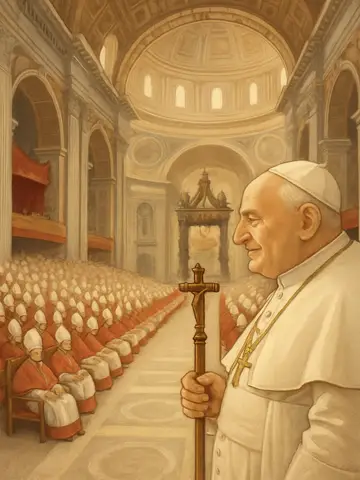
At the end of the 11th century, Christian Europe was in full religious effervescence, reinforced by the appeal of Pope Urban II made in 1095 at the Council of Clermont. He urged Western knights to free Jerusalem and the holy places of Muslim rule. This initiative was part of a context of strong religious and geopolitical tensions, including the rise of the Seljuk in the Holy Land. The crusade was prepared not only as a military expedition but also as an armed pilgrimage, mobilizing thousands of men, including nobles, knights and peasants. Despite the difficulties of long walks and deprivations, the determination to reach Jerusalem does not weaken.
Crusaders take Jerusalem decisively
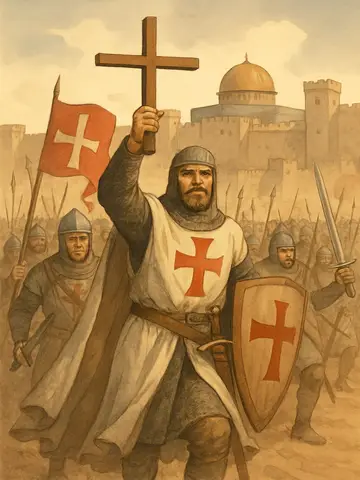
After a siege of several weeks in June and July 1099, the crusaders managed to enter Jerusalem on 15 July. The city, strategically fortified and defended by the Egyptian Fatimids, resisted fiercely, but the tenacity of the attackers finally prevailed. The catch was marked by extreme violence: the Crusaders led the Muslim and Jewish population to a failure, often in a bloody manner, which remains a tragic episode in the history of the Crusades. The capture of Jerusalem allowed the creation of the Latin Kingdom of Jerusalem, a Christian political entity that lasted almost a century. This military success was seen as a divine victory, consolidating the prestige of the papacy and the fervour of the crusaders.
The capture of Jerusalem in 1099 by the first Crusade symbolizes both the fervent faith of the Crusaders and the brutality of the religious conflicts of the time. This event deeply marked the collective memory of the Christian and Muslim worlds, initiating a long period of rivalries and successive crusades. More than just a military victory, it is an essential page in medieval history that illustrates tensions between beliefs, power and territories.