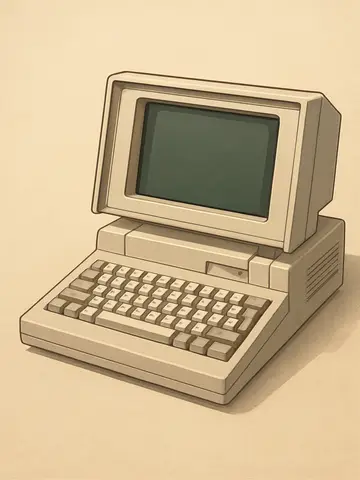
The history of computer science is marked by many innovations, but none has changed our way of working and communicating as much as the invention of the first laptop. In 1981, a decisive step was taken, laying the foundations for modern mobile computing. This article explores this major technological advance and its lasting impact.
The Revolutionary Invention of the First Laptop
In 1981, Osborne Computer Corporation launched the Osborne 1, considered the first real laptop in the market. With a weight of about 11 kilograms, it could be transported relatively easily compared to the traditional desktop computers of the time. With a 5-inch display and an integrated keyboard, the Osborne 1 offered unprecedented portability, although its range and performance were limited by current standards. This revolutionary invention allowed professionals to work on the move, radically changing the dynamics of computer work.
How the 1981 Model Changed Mobile Computer
The launch of Osborne 1 in 1981 paved the way for a new era in which computers were no longer confined to fixed offices. This model has inspired many manufacturers to develop lighter, more efficient and more accessible computers, multiplying the potential of mobile computing. Thanks to this innovation, users could take their data and software anywhere, thereby promoting increased productivity and unprecedented flexibility. The very concept of a laptop has evolved from this pioneering model to become an indispensable tool in everyday and professional life.
The first laptop in 1981, although rudimentary according to our current criteria, represents a crucial historical step in the evolution of technology. It has paved the way for computer mobility, an area that continues to reinvent itself constantly. Today, thanks to these first advances, we benefit from ever more powerful, light and connected devices, witnesses to the ingenuity of those who have been able to imagine a future where computing accompanies the user everywhere.