

Historical and political context of the Paris of 1686
In 1686, Paris was the capital of the Kingdom of France under the reign of Louis XIV, the « Sun King », whose absolute monarchy strengthens centralized power and strictly controls society. The city is growing demographically and economically, attracting a diverse population around the arts, commerce and administration. The relative peace established after the wars of the Fronde allows a climate conducive to the circulation of ideas and the emergence of new places of sociability. The Court of Versailles established cultural norms, but Paris remained a centre for intellectual and commercial exchanges. Coffee, a drink from the East introduced into Europe in the 17th century, symbolizes this gradual openness to external influences, despite some initial mistrust.
Birth and impact of the first Parisian coffee on society
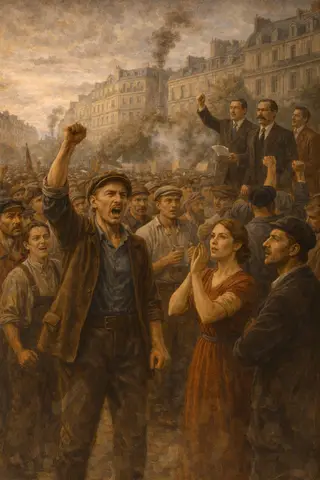
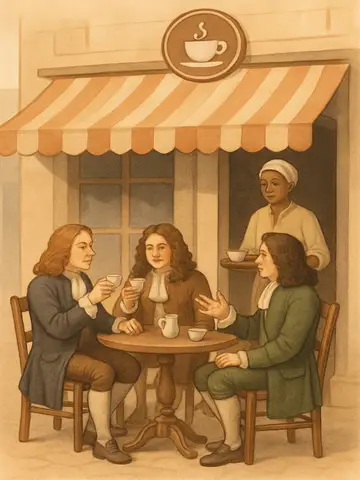
The first Parisian café was opened in 1686, often attributed to the establishment of « The Procope », founded by Francesco Procopio dei Coltelli. This place quickly becomes a meeting point for intellectuals, artists and politicians, offering an unprecedented public space for discussion and debate. The spread of coffee is accompanied by a profound change in consumption and sociability patterns: unlike traditional taverns, coffees encourage reflection, reading and exchange of ideas. In the short term, they facilitate the emergence of modern urban culture. In the long term, these institutions participate in the birth of the « Century of Lights » in France, contributing to the circulation of critical ideas that will lead to the French Revolution. This phenomenon is part of the continuation of 17th century cultural innovations, such as the creation of the French Academy (1635) or the publication of the first newspapers.
Historical links: The opening of the first coffee shortly precedes the publication of the Encyclopaedia (1751), which spreads the ideas of the Enlightenment, and is part of the European colonial trade that imports coffee and spices. Moreover, the popularization of cafés in Paris prefigures their central role in the French Revolution (1789), where they become places of political mobilization.