

The year 1917 is often recognized as a decisive turning point in the history of music, officially marking the birth of modern jazz. This genre, which draws its roots from African-American traditions, blues music and New Orleans rhythms, has undergone a major transformation thanks to iconic recordings made that year. Let's dive into the origins of jazz and discover why 1917 is so important to this unique musical style.
The Origins of Jazz: The Year Founder 1917
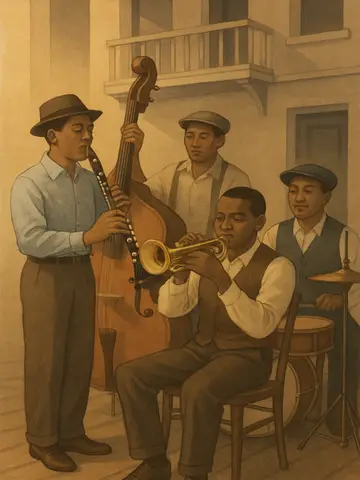
Jazz was born from a complex mix of cultures and musical influences. Prior to 1917, this style was developed mainly in the southern United States, notably in New Orleans, where African-American musicians mixed blues, ragtime and religious songs. However, it was the first recordings made in 1917 by the Original Dixieland Jass Band in New York that truly allowed jazz to leave local scenes to reach a national and international audience. This band, composed mostly of white musicians, immortalized songs like « Livery Stable Blues » and « Dixie Jass Band One-Step », offering the public a first hearing experience of this new genre still evolving.
How 1917 Marked the Birth of Modern Jazz
The importance of 1917 lies not only in the first recordings, but also in the diffusion and recognition of jazz as a form of music in its own right. These recordings have made known a style characterized by improvisation, syncopated rhythms and the unprecedented sounds of brass and piano. In addition, the migration of African-American musicians to the north of the United States, particularly in Chicago and New York, has allowed jazz to develop further and diversify. The cross-influences between musicians of different origins have given rise to modern jazz as we know it today, laying the foundations for further evolutions such as swing, bebop and much more.
In short, 1917 represents a pivotal date in jazz history, marking the transition from the genre of an essentially oral and local tradition to a musical form recorded and broadcast on a large scale. This key moment allowed jazz to impose on the world stage, deeply influencing 20th century music. Even today, the roots laid that year continue to resonate in every jazz note played around the globe.