

In 1858, Paris was the scene of a major innovation in fashion: the official birth of haute couture. This creation is part of a particular political and cultural context, which promotes the emergence of an exceptional art of clothing, soon recognized throughout the world.
Historical and political context of Paris in 1858
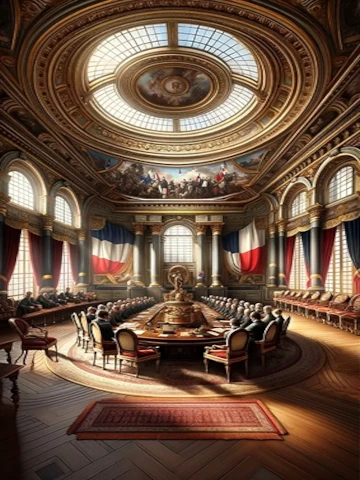
Under the Second Empire, led by Napoleon III, Paris underwent a profound urban and social transformation. Baron Haussmann modernises the city, creating wide avenues and elegant neighbourhoods, conducive to the appearance of an easy and cosmopolitan clientele. This enriched bourgeoisie is eager for novelties and luxury, which encourages the development of an exclusive fashion industry. On the other hand, industrialisation accelerates textile production, while enhancing French craftsmanship. This stable and prosperous political context therefore creates an ideal ground for the launch of an innovative fashion form, intended for an elite seeking distinction and refinement.
Foundation and influence of Parisian haute couture
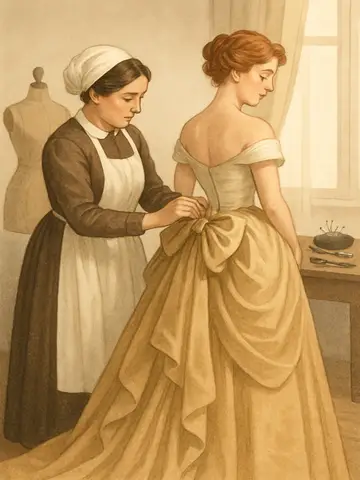
In 1858, Charles Frederick Worth, an English designer based in Paris, was considered the founding father of haute couture. He installed his house on Rue de la Paix, where he created exclusive clothing for a wealthy clientele, including empresses and aristocrats. Worth innovates by imposing the concept of seasonal collections presented in the private lounge, as well as the signature of the designer on creations, which marks a break with the simple crafting. This professional organization creates an economic model around fashion, which will be quickly imitated and perfected. The haute couture becomes a symbol of Parisian elegance and helps to establish the French capital as a world reference in this field.
The birth of haute couture in 1858 is part of a favourable urban and political context, driven by the artistic and commercial innovation of Charles Frederick Worth. It has a lasting influence on the fashion sector, linking Paris to 19th-century cultural and economic history, and prepares the ground for other major changes, such as the Universal Exhibition of 1889 and the rise of ready-to-wear in the 20th century.