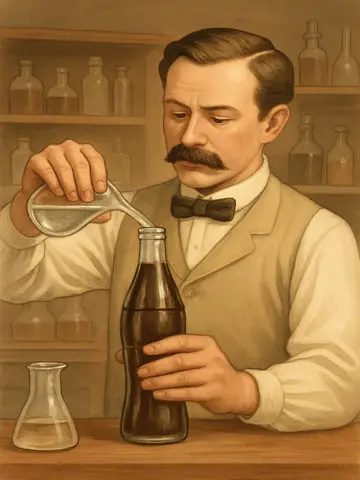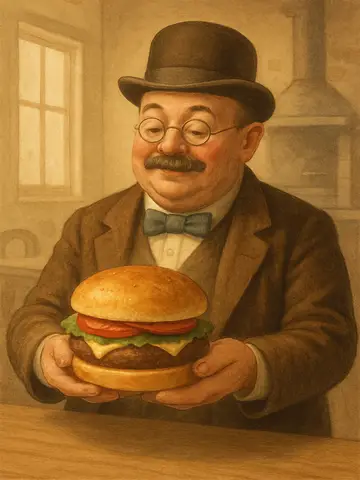
At the beginning of the 20th century, the United States experienced rapid industrialization, encouraging the emergence of new forms of restoration adapted to an urban and mobile lifestyle. The 1904 universal fair in Saint-Louis is part of this modernization and exhibition of cultural and technological innovations.
Historical and geographical context of the invention of the burger
In 1904, the city of Saint-Louis, Missouri, hosted the Universal Exhibition, a major event celebrating scientific and cultural advances. This fair is taking place in an expanding industrial America, where urban mobility creates a growing need for fast and accessible meals. It is in this context that the idea of a sandwich made of minced meat, easy to consume on the thumb, takes shape. Saint-Louis, Midwest's economic hub, provides a framework for the rapid spread of this new food product.
Essential facts and cultural impact of the 1904 fair in Saint-Louis
At the 1904 fair, several merchants proposed a preparation consisting of a chopped steak served between two slices of bread, which will soon be called « hamburger ». This culinary innovation allows visitors to eat quickly while moving, responding to the influx of more than 20 million visitors. The immediate success of this popular dish marks the beginning of its massification. The burger becomes a symbol of the American fast food industry and an internationally exported culinary icon. This invention also influenced the structuring of the modern food chain and the growth of fast food since the 1950s.
Issues and impacts
In the short term, the 1904 burger democratized access to a simple and economical meal, responding to the new urban rhythms. In the long term, it contributes to changing eating habits and popular culture, embodying the standardization and globalization of food. Its development is part of a logic of mass production and mass consumption, in connection with industrial growth and the consumer society. Politically, it reflects the social changes of an urban and capitalist America. The hamburger will also become a major cultural vector in the spread of American influence throughout the world.
Historical links
The invention of modern hamburger in 1904 followed the industrial revolution of the 19th century, which changed lifestyles and demanded fast food. It precedes and prepares the development of fast food chains such as White Castle (established in 1921) and McDonalds (1940), which will institutionalize this mode of consumption. Finally, this food phenomenon is linked to the cultural globalization of the twentieth century, where the burger becomes a symbol of American culture on a global scale, especially after the Second World War with the spread of mass consumer products.