

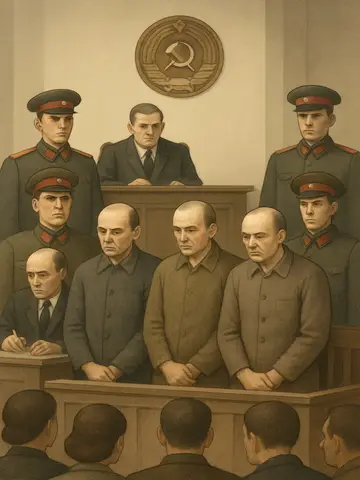
The Moscow Grand Trial of 1937 represents a dark and crucial period in Soviet history, marked by massive political purges orchestrated by Joseph Stalin. This trial, emblematic of the Great Purges, was aimed at eliminating the real or supposed opponents of the regime, by setting a terrifying example for any opposition. A review of the context and protagonists of this trial which has profoundly affected the USSR and the world.
Historical background of the Moscow Grand Trial in 1937
The Moscow Grand Trial was part of the Great Purges period that shook the Soviet Union between 1936 and 1938. At that time Stalin sought to consolidate his power by eliminating any form of opposition, real or imaginary, within the Communist Party and the state apparatus. The 1937 trial was the second major trial in Moscow, after the 1936 trial, and it took place in a climate of widespread fear and suspicion. Accused of treason, sabotage and counter-revolutionary conspiracy, the former Bolshevik leaders were forced to confess under torture or threat, and were generally sentenced to death or long prison sentences. This trial perfectly illustrated the institutionalized mechanism of terror that characterized the Stalinist regime.
The main actors and accusations of the Moscow trial
The protagonists of the Moscow Grand Trial of 1937 were mainly former eminent members of the Bolshevik Party, considered rivals or threats to Stalin. Among them were personalities such as Grigori Zinoviev and Lev Kamenev, who had once held influential positions in the party. The charges against them were serious: participation in a so-called Trotskyist plot to overthrow the regime, economic sabotage, espionage to foreign agents, and even attempted assassination against Stalin. These charges were largely fabricated or exaggerated, and trials were conducted in conditions where the presumption of innocence had no weight. Under pressure from interrogations, the accused signed public confessions, often later contradicted. These trials served as much to eliminate opponents as to scare the population and strengthen Stalin's absolute authority.
The Moscow Grand Trial of 1937 remains a dark symbol of political repression in the Soviet Union, where justice was instrumentalized to serve an authoritarian regime. These spectacular trials marked the tragic end of many Bolshevik activists of the first hour, at the same time as they established an atmosphere of permanent terror. More than just a judicial event, this trial was a key step in the construction of Stalin's personality worship and the radical transformation of Soviet society. Today, he reminds us of the dangers of uncontrolled power and judicial manipulation at the service of dictatorship.